
Last updated November 25, 2026
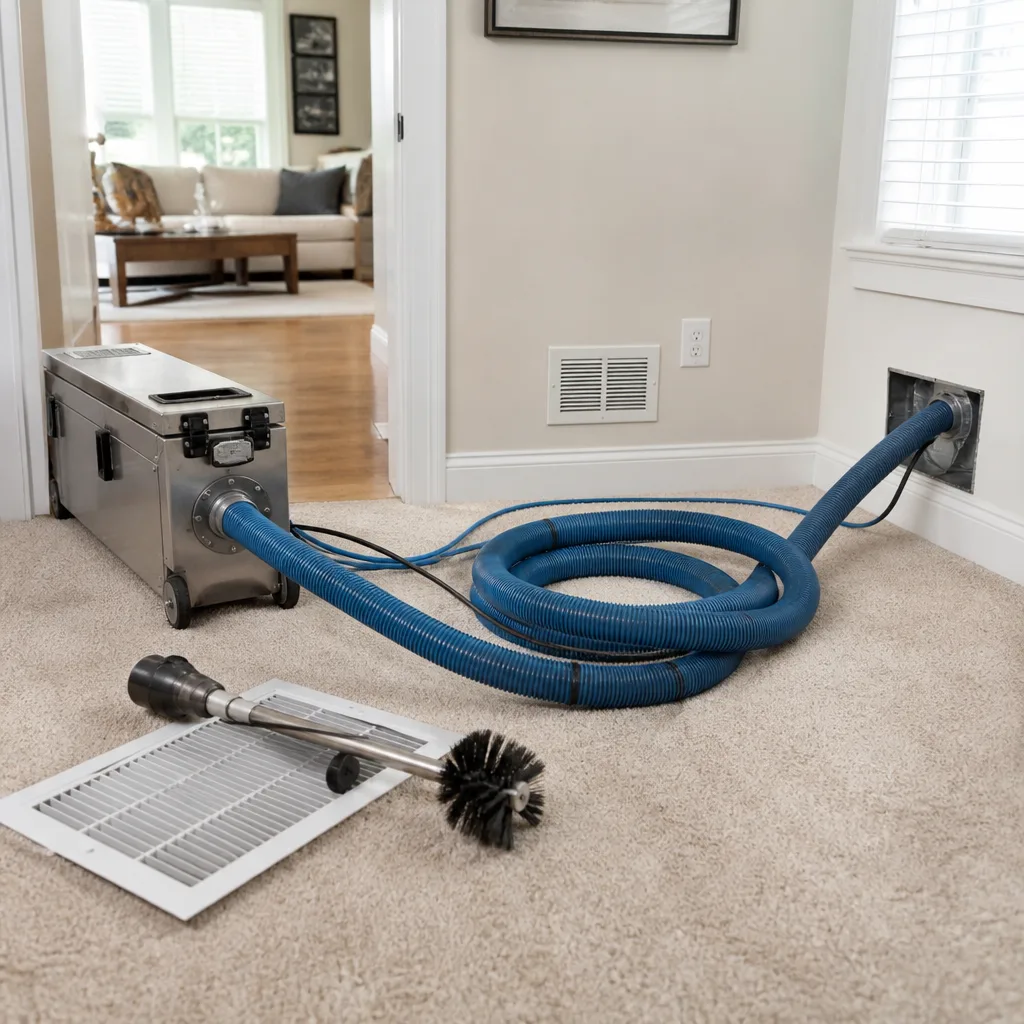 Whole-home duct cleaning
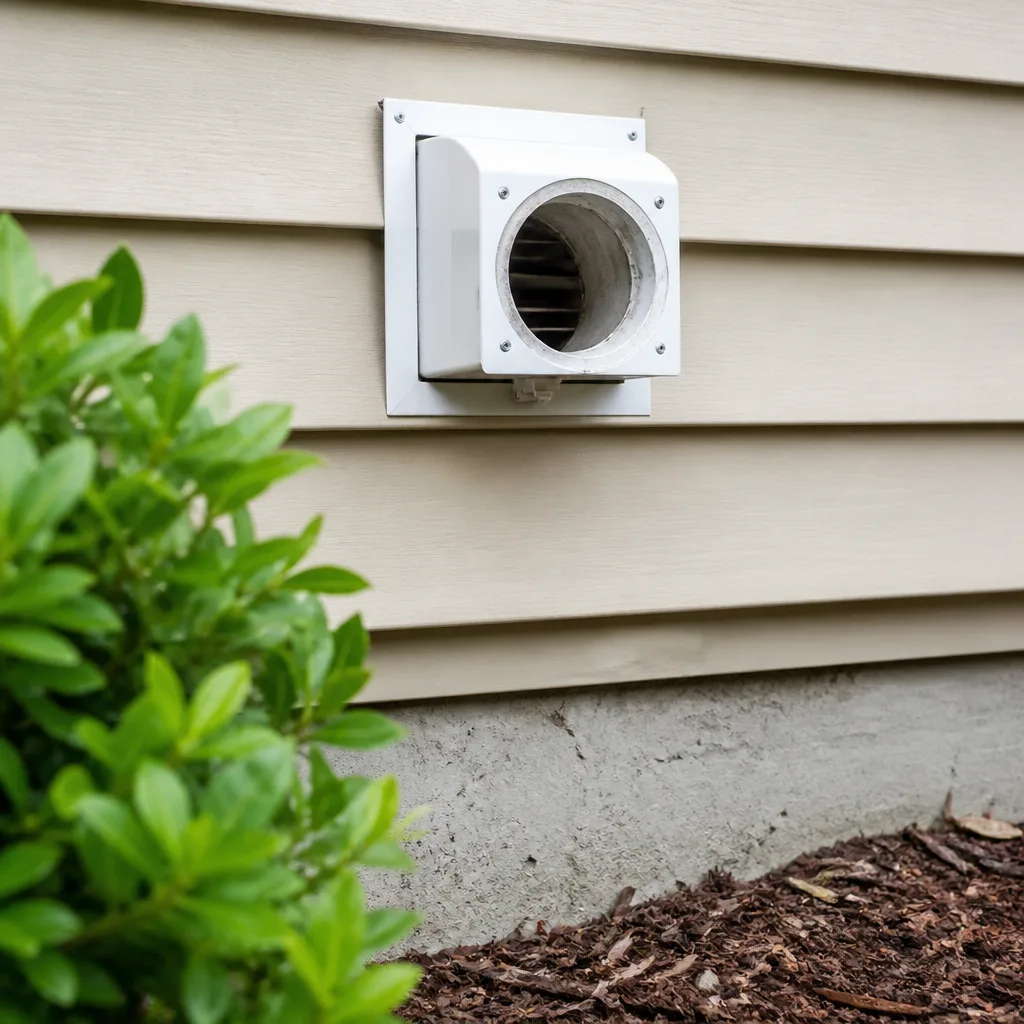 Dryer vent cleaning
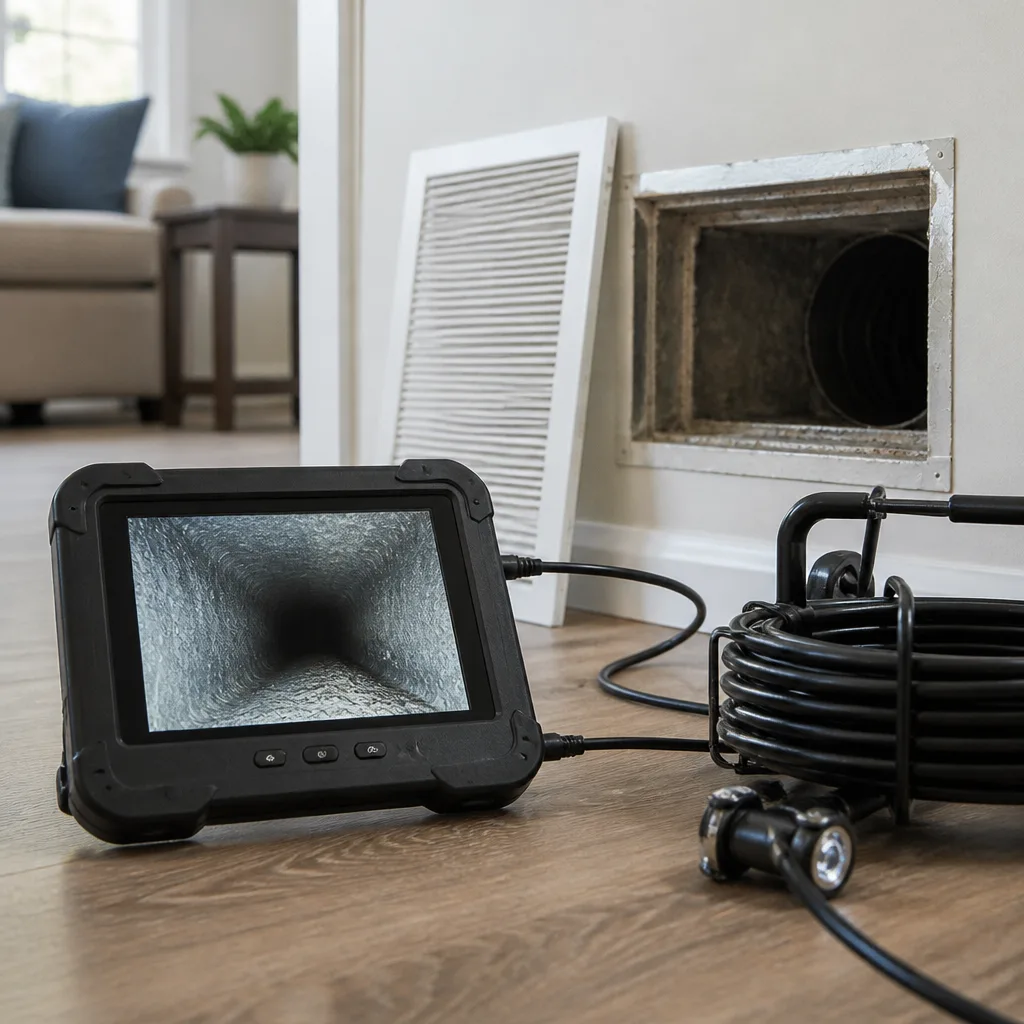 Camera inspection
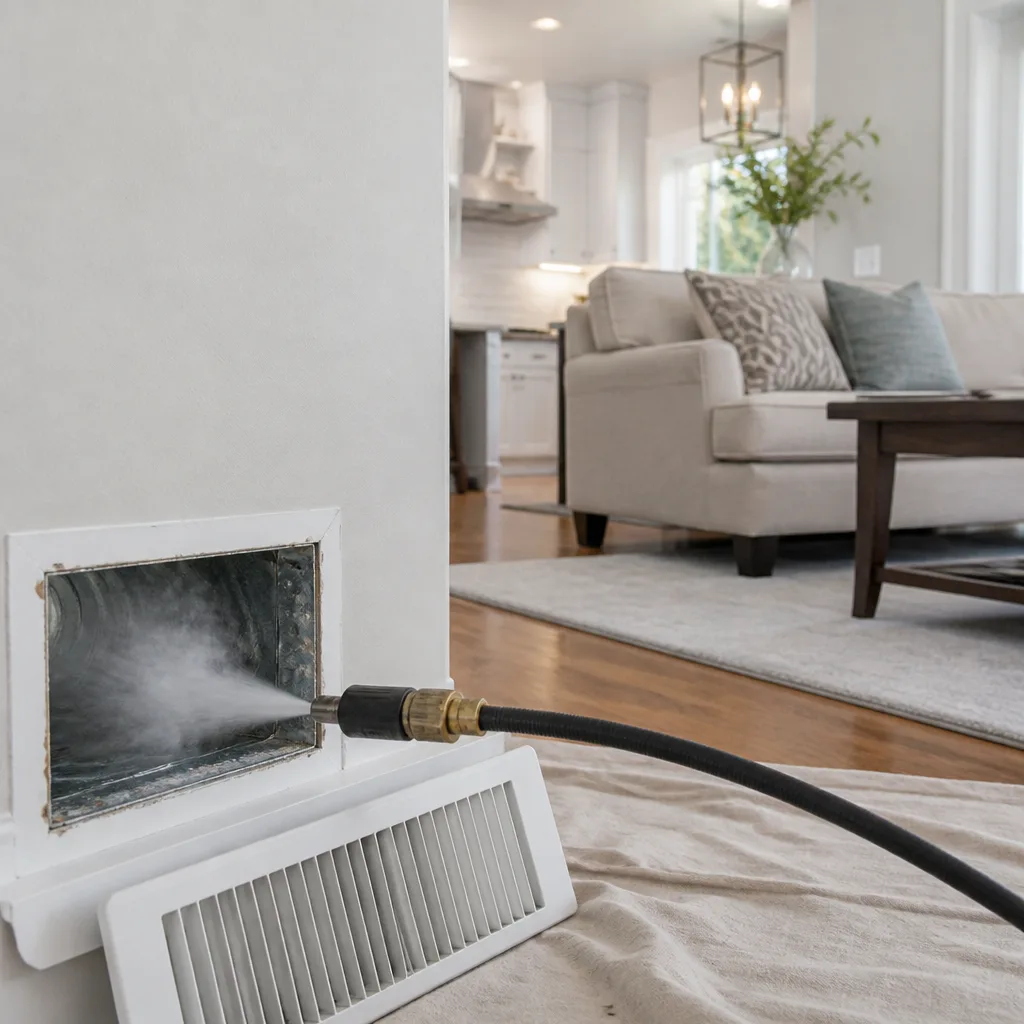 Sanitizing & deodorizing
Whole-system duct and dryer vent check with before-and-after photos - you see exactly what came out of your vents
That "$99 whole-house special" is a bait ad - the real number appears once they are in your hallway, or the "clean" is a shop-vac at the register. We photograph the inside of your ducts before and after instead.
Air Duct Cleaning Warning Signs: A Parkside Homeowner’s Reference Guide
The dust you can see is the least useful sign your ducts need attention. By the time a gray film shows up on the supply registers, contamination inside the trunk lines and branch runs has usually been building for a long time. The earlier signals are quieter: a bedroom that never warms up, a smell that shows up only when the heat comes on, a filter that clogs faster than it should. None of those scream “duct problem” on their own.
This guide connects each observable warning sign to the specific mechanism inside your duct system causing it. Instead of a checklist of symptoms to Google, you’ll get the “why” behind each one, so you can tell normal dust from a real problem. We’ve written it from Parkside, where the housing stock and the way homes here are heated and cooled both shape what we find.
Quick Answer
The main warning signs of dirty or damaged air ducts are a powdery gray film on registers, uneven room temperatures, musty or chemical odors when the system runs, allergy symptoms that worsen indoors, visible debris at the filter, and unexplained jumps in energy use. A single sign is worth watching; two or more together usually mean contamination or leakage somewhere upstream of the registers, which a professional inspection can confirm.
Styles & brands we work with
- Whole-home duct cleaning
- Dryer vent cleaning
- Camera inspection
- Sanitizing & deodorizing
Table of Contents
- Sign 1: The Register Dust Test
- Sign 2: Uneven Room Temperatures
- Sign 3: Musty vs. Chemical Odors
- Sign 4: Allergy Symptoms Indoors
- Sign 5: What You See at Filter Changes
- Sign 6: Energy and Airflow Changes
- How to Read the Signs Together
- What to Do Before You Call
Sign 1: The Register Dust Test (and What Normal Dust Actually Looks Like)
Every register in a home collects some dust. The question is what kind. Normal register dust is loose, slightly coarse, brown or tan, and easy to wipe off with a dry cloth. It builds up because the supply jet creates a small static field that grabs particles as air leaves the vent. That’s ordinary. A powdery gray film is different: it clings, it wipes away as a streak, and it comes back within weeks of cleaning. That film is the sign that particles are being carried in volume through the ducts rather than settling out at the vent.
How the wipe test works
- Wait at least a week after your last dusting so you’re not reading your own housekeeping.
- Wipe one supply register with a white paper towel, dry, using a single pass.
- Do the same on a second register in a different part of the home.
- Check the towel in daylight. Loose tan dust that brushes off is normal. A gray, smeary streak that stains the towel means airborne particulate is arriving from upstream.
Two registers showing the gray film is more telling than one. It points to a systemic source rather than a single branch line. In Parkside, where many homes have original sheet-metal trunk lines feeding later-added rooms, we often find that contamination collects in the older trunk and gets pushed into every branch downstream. Professional rotary brush and vacuum systems, like the Rotobrush and Nikro equipment we use, are built to reach those trunk runs rather than just the visible branch. Surface wiping can’t fix a trunk problem.
Sign 2: Uneven Room Temperatures and What They Reveal About Duct Restriction
A room that stays cold in winter or warm in summer isn’t automatically a duct problem, but it’s the most common way a duct restriction announces itself. Three separate faults produce the same symptom, and each has a different fix:
- Restriction. A crushed or collapsed flex run, a closed damper you didn’t know existed, or debris choking a branch reduces airflow to that room. The register feels weak to the hand.
- Leakage. A disconnected joint or a hole in a duct dumps conditioned air into a crawlspace, basement, or wall cavity before it reaches the room. The register feels moderately strong but the room never responds.
- Damper failure. A balancing damper stuck closed, or a damper handle that’s been turned at the trunk but never reopened, starves a specific branch.
You can tell these apart with one test. Hold a tissue to the register face. Flutter that’s brisk and even means airflow is present; a limp flutter or none means restriction. If airflow is strong but the room still won’t hold temperature, leakage is more likely. That distinction matters because a cleaning job alone won’t fix a disconnected duct. Duct repair and sealing addresses the leak at its source, which is a separate step from cleaning. When temperature problems and visible contamination show up in the same home, both need to be handled together or the symptom returns.
Sign 3: Musty vs. Chemical Odors (They Mean Different Things)
Odor is the sign homeowners most often describe as “something’s off,” and it’s also the sign most often misdiagnosed. Two odors that seem similar point to completely different problems in the duct system.
Musty or earthy odors: biological growth
A musty smell that appears when the system starts and fades shortly after usually means moisture has collected somewhere in the duct run and supported microbial growth. The most common culprits are the evaporator coil pan, a duct run through a humid basement or crawlspace, and poorly insulated runs on an exterior wall where condensation forms. A musty odor is a moisture problem first and a dirt problem second. Cleaning the ducts without addressing the moisture source means the growth returns.
Chemical or “hot plastic” odors: liner degradation
An odor that reads sharp, chemical, or like warm plastic is a different animal. Interior duct liner, the fibrous acoustic coating inside some duct systems, breaks down with age and heat cycling. As it degrades it releases volatile organic compounds that get pushed through the supply air. The smell often worsens in heating season because the first warm air after a cold snap drives off gases from the liner. This is not a smell you can treat with sanitizing alone.
Sanitizing treatments using products like Guardsman address the biological side, but liner degradation is a materials problem. It needs inspection and, in many cases, relining or replacement of the affected run. If you can’t tell which odor you have, that’s the point at which a professional inspection earns its keep. The distinction can’t be settling for a smell test over the phone.
Sign 4: Allergy Symptoms That Worsen Indoors
Seasonal allergies follow a different pattern than duct-related symptoms. Pollen and outdoor triggers peak when you’re outside and ease once the windows close. Symptoms that get worse indoors, especially in particular rooms or the hour after the system kicks on, point to particulates being recirculated through the ducts and delivered back into the living space. Common reports from Parkside homeowners include morning congestion that clears during the day, sneezing that starts when the heat or air conditioning comes on, and a bedroom that feels stuffy no matter how the thermostat is set.
What’s happening is this: fine particles (dust mite debris, pet dander, mold spores, construction dust from a renovation) settle in the duct system, then lift off when airflow passes over them and get distributed to every supply in the house. A standard 1-inch filter catches some but not all of it, and once a filter loads it stops catching much of anything.
What actually reduces recirculation
- Clean the full duct system so settled particles are removed rather than disturbed.
- Seal the leaks in the ductwork so unfiltered air from unconditioned spaces doesn’t get pulled in.
- Upgrade filtration with a system designed for it, like a Honeywell or Aprilaire air cleaner, matched to the correct filter media.
- Keep filters changed on the correct interval for your home’s load, not on a generic calendar.
Cleaning removes what’s there. Filtration and sealing keep it from coming back. Doing only one of those three leaves you with half a solution.
Sign 5: What You See During Filter Changes
Your filter is a window into the system, but you have to read it correctly. A filter that’s uniformly gray but only lightly loaded is doing its job. A filter with dark patches on one side, heavy debris packed on the intake face, or visible streaks of dust bypassing around the edges is telling you something else.
- Debris on the intake side only means contaminant is arriving from the return ducts. That’s an upstream problem, and the filter is catching what the return is delivering.
- Dust bypassing around the edges means the filter isn’t sealing to the cabinet. Air is going around the filter, so the system is unfiltered no matter what filter you install.
- Debris on the downstream side is the worst sign. It means contaminants are getting past the filter entirely and into the supply ductwork, and the whole system is now the filter.
- Rapid loading (a filter that clogs in weeks instead of months) means there’s a heavy particulate source that hasn’t been cleaned up, usually inside the ductwork itself.
When we clean a system, we inspect the filter cabinet and the return plenum as part of the job. A clean filter in front of a dirty return line is a false sense of security. Professional equipment like Abatement Technologies filtration and containment gear lets the work proceed without redistributing the very particle load being removed. You can read more about our full-service approach on the Air Duct Cleaning Parkside homepage.
Sign 6: Rising Energy Bills and Weak Airflow
Dirty and leaky ducts make your HVAC system work harder for the same result. That shows up as two measurable signals: higher energy use at the same thermostat setting and slower temperature recovery after a system cycle. A blower pushing against a restricted or leaking duct network runs longer and moves less air, so it burns more energy to do less conditioning. A leaky system loses a fraction of its conditioned air to the crawlspace before it ever reaches a room, and you pay to reheat or recool it.
Compare the same month against the previous year’s figures, adjusted for weather. A jump of a noticeable percentage in a home that hasn’t changed in any other way is worth investigating. So is a system that runs continuously on days it used to cycle comfortably. Neither guarantees a duct problem, but together with any of the earlier signs, they tip the diagnostic toward the ducts. In Parkside’s older homes, duct runs often include lengths of original sheet metal and sections of later flex additions, and those transitions are where leakage tends to concentrate. Cleaning, sealing, and cleaning the HVAC unit itself (the coil, blower, and cabinet) address the airflow side of the equation as a set.
How to Read the Signs Together
Individual signs can have innocent explanations. Two or more that point upstream are a pattern. The table below is the diagnostic logic we use when judging a system in Parkside:
- Gray register film + quick-loading filter: systemic contamination in return and trunk ducts. Cleaning is the starting point; investigate the particulate source.
- Uneven rooms + weak register flutter: restriction or closed damper. Inspect for crushed runs and damper position before assuming dirt.
- Uneven rooms + strong flutter: leakage. Duct repair and sealing is the fix; cleaning alone won’t restore the lost air.
- Musty odor + moisture in crawlspace or basement: biological growth from condensate. Address the moisture, then sanitize and clean.
- Chemical odor + heat season start: liner degradation. Inspection needed; sanitizing won’t resolve it.
- Indoor symptoms + outdoor relief: recirculation. Cleaning plus filtration upgrade is the effective combination.
- Energy jump + continuous runtime: restriction or leakage. Airflow test and duct integrity check will separate the two.
None of these signs is a red-alert emergency, but each one that goes unaddressed tends to make the others worse. A leak lets in unfiltered air, which adds contamination, which then loads the filter faster, which reduces airflow, which raises energy use. The system degrades as a whole, not one problem at a time.
What to Do Before You Call
A few simple steps help us diagnose the problem when you call, and they help you spot the difference between a duct issue and something else.
- Do the two-register wipe test on supply vents a week after your last dusting.
- Run the system and hold a tissue to each register to compare airflow room to room.
- Check your filter cabinet for bypass gaps and note how recently the filter loaded.
- Write down which rooms feel wrong and which smell comes on when the system starts.
- Note any recent renovation, new carpet, or recent move-in. Construction dust and new materials both add load.
That short record is far more useful than a vague “my ducts need cleaning” when a professional inspects. It lets the inspection start at the right place instead of chasing the wrong problem. For a fuller picture of the service itself, see our air duct cleaning page.
Common Mistakes to Avoid
- Judging the whole system by one register. A single dusty vent can just be a poorly aimed diffuser. The gray film on two or more registers is the sign that matters. In Parkside homes with a long trunk line, the nearest register often looks cleanest by surprise.
- Assuming a cleaning fixes uneven temperatures. Uneven rooms are often caused by leakage or restriction, not dirt. If a technician cleans and the room is still cold, the real problem was never addressed.
- Mistaking a chemical smell for mold. Liner degradation has a sharp smell that homeowners almost always call “musty” when it isn’t. Sanitizing doesn’t fix a degraded liner.
- Upgrading filtration without sealing the ducts. A high-efficiency filter installed in front of leaky ductwork still feeds unfiltered air into the system from the crawlspace.
- Treating a single filter change as a system clean. New filters are always step one of maintenance, not a substitution for duct cleaning.
- Ignoring moisture. A musty smell that returns shortly after a cleaning usually means the water source wasn’t found. Cleaning a system with an active moisture problem just restarts the clock.
- Accepting a quote that prices per vent. Vent-by-vent pricing tempts a bidder to add vents on the invoice. A whole-system flat price agreed before work starts is the fair structure, and it’s what you should ask for.
See the difference
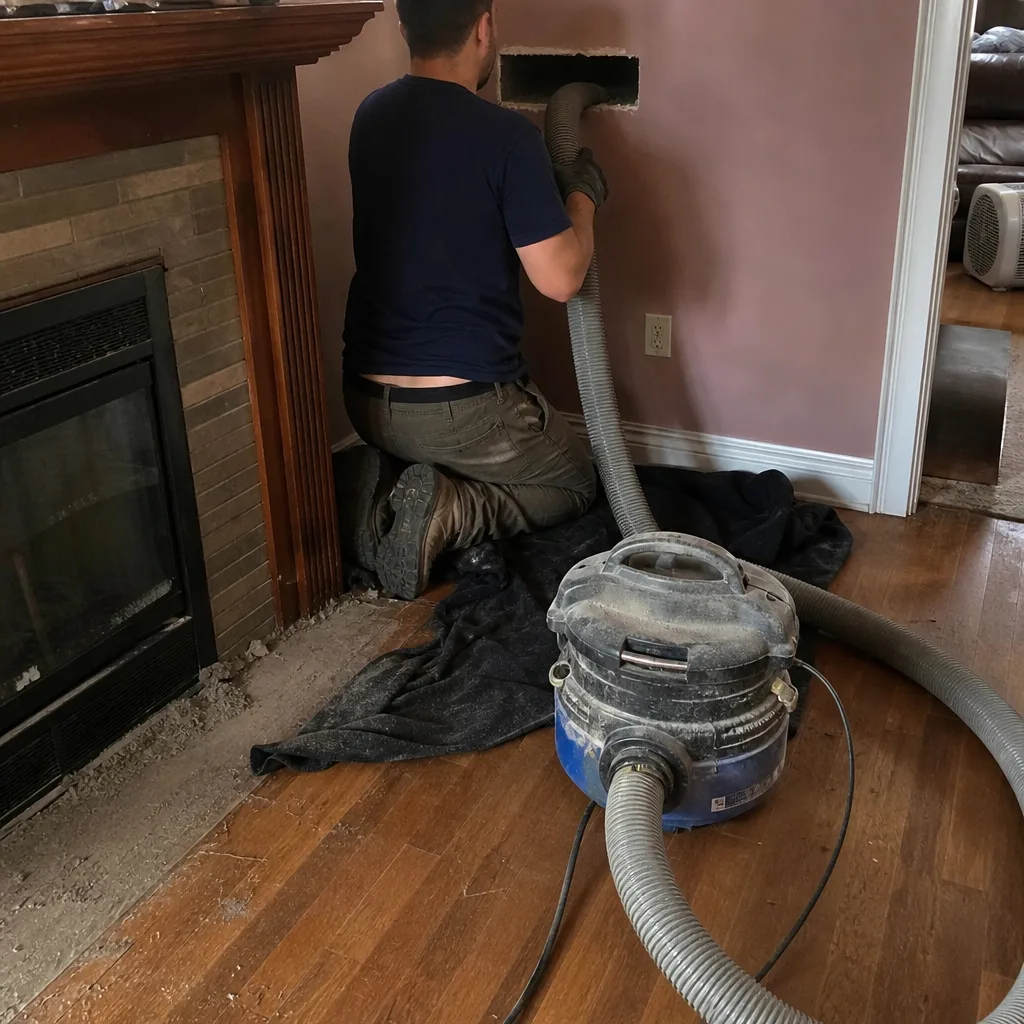 Before
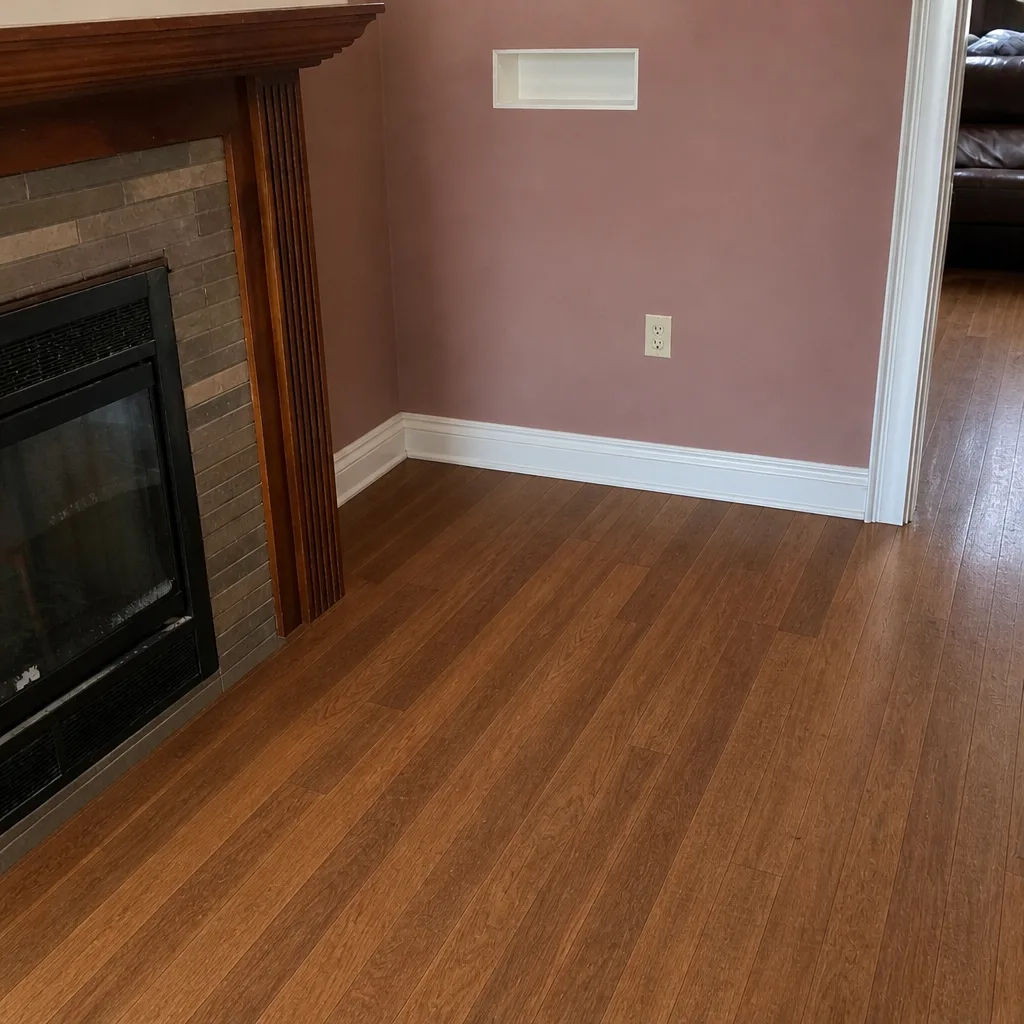 After
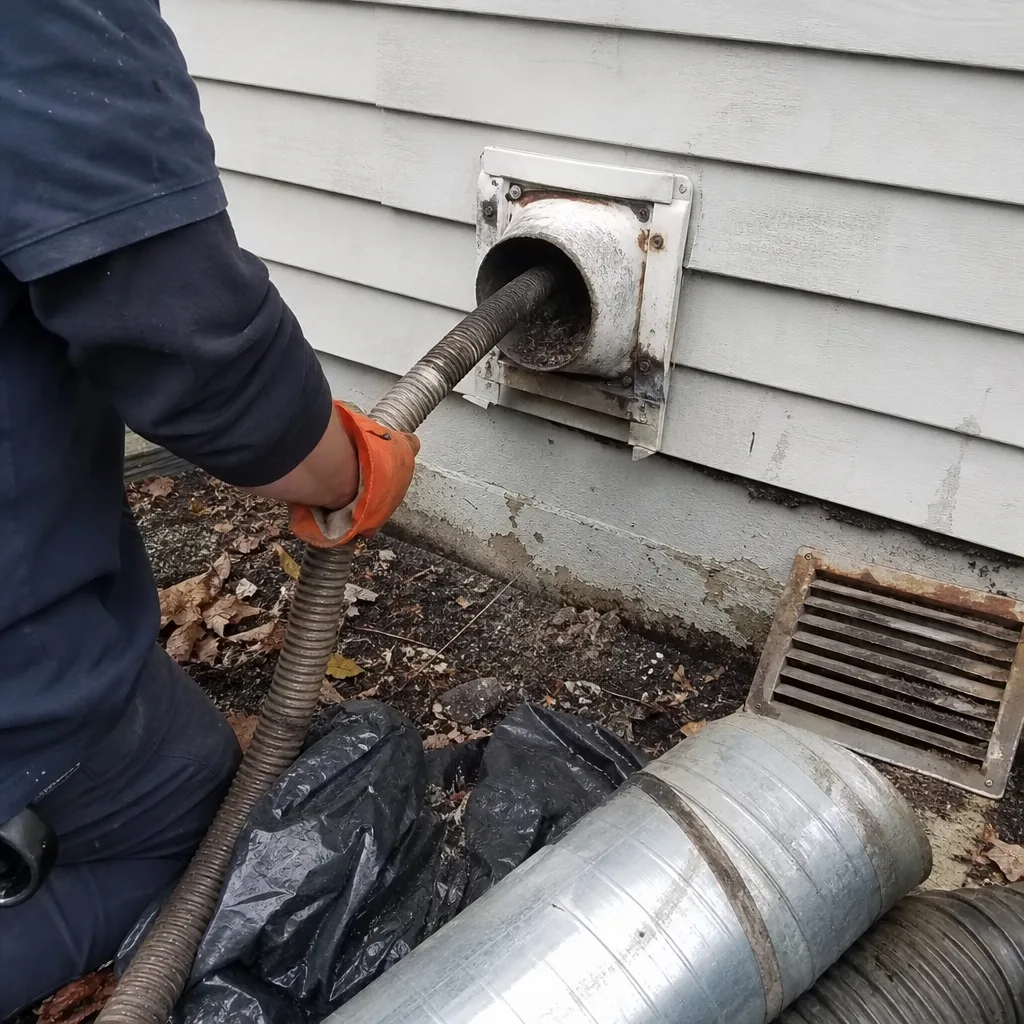 Before
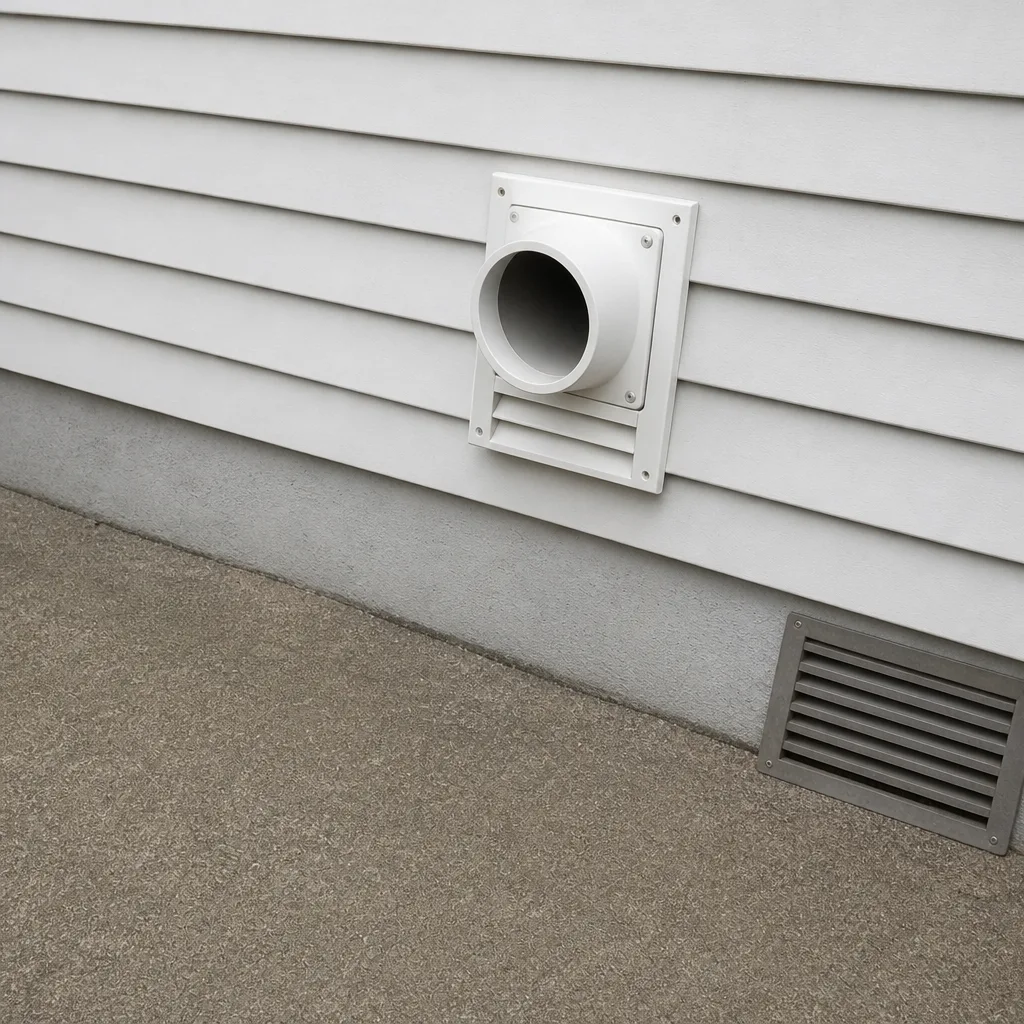 After
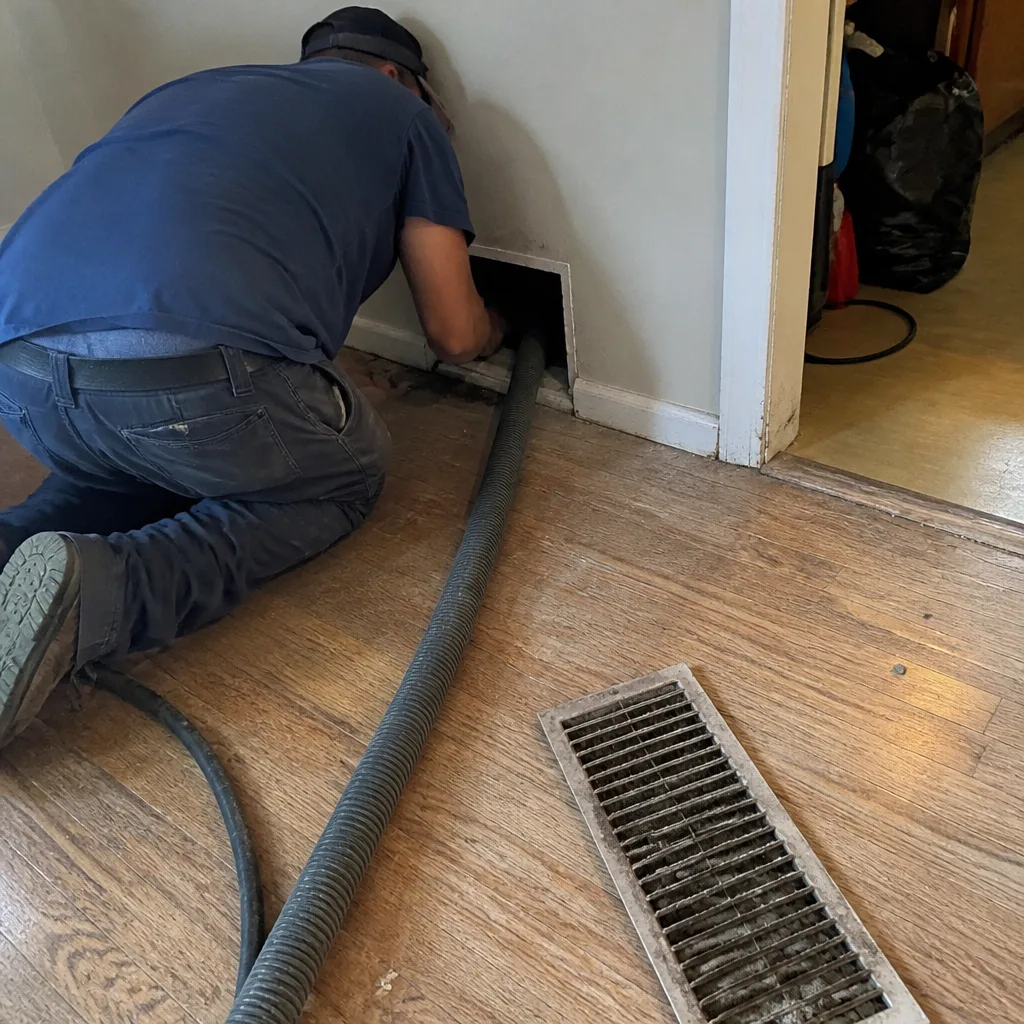 Before
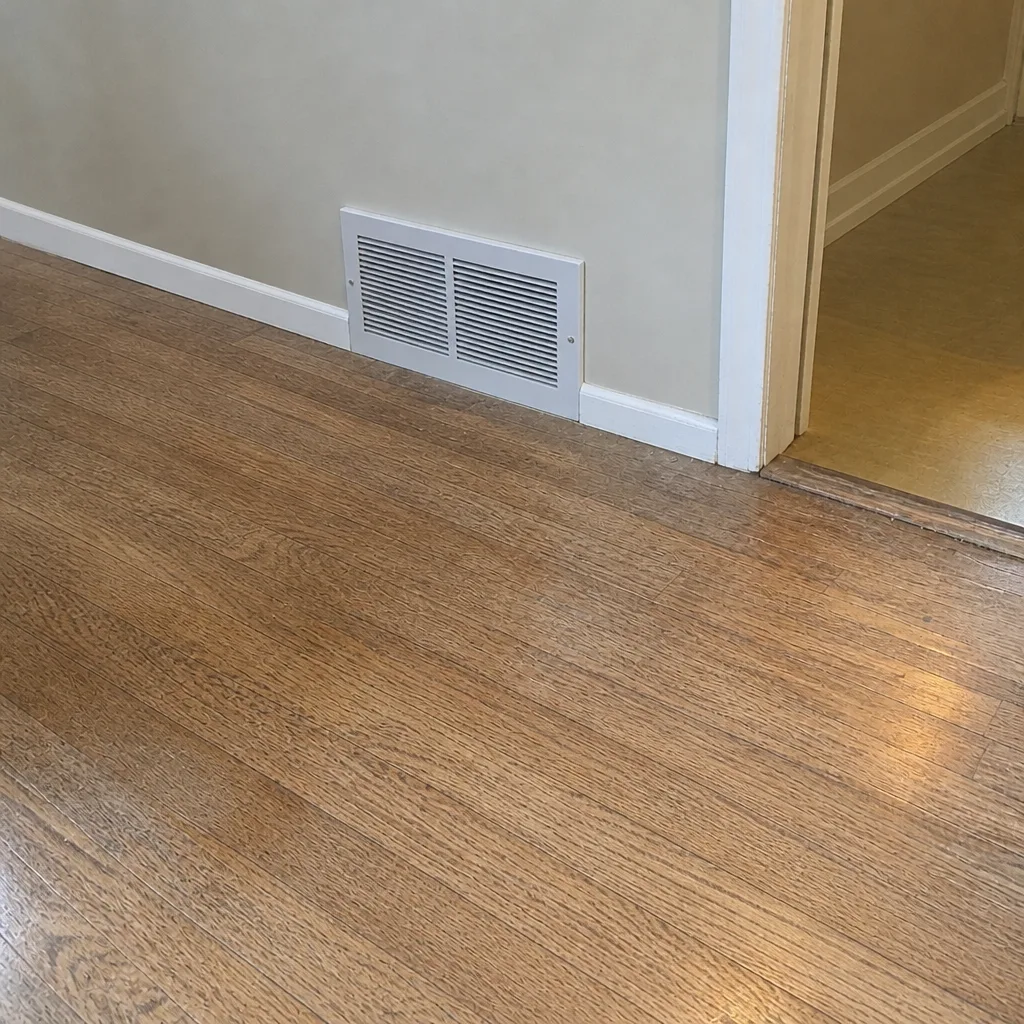 After
When to Call a Professional
Call a professional when you see two or more of the signs in this guide together, when a musty or chemical odor returns after cleaning, or when a room stays uncomfortable after the filter, thermostat, and dampers have been checked. Call too if you’ve just moved into a Parkside home and don’t know the service history of the ducts, or if a renovation has left construction dust behind. Duct repair and sealing is a separate competency and should be done by someone with the equipment to inspect and address structural issues, not just a cleaning contractor. Our technicians have up to 13 years of experience across the full system: ducts, dryer vents, HVAC units, duct integrity, and air sanitizing. For related services, see HVAC cleaning and dryer vent cleaning. Air Duct Cleaning Parkside offers free estimates in Parkside. Call (833) 482-5968. We answer 24/7. Fast dispatch from 7am to 7pm, Sunday through Friday.
Frequently Asked Questions
Look for two or more of the signs in this guide before deciding, and ask a contractor to explain what they found, not just recommend a service. The clearest indicators are gray register film on multiple vents, a filter that loads in weeks, and a musty or chemical odor on system startup. If a proposal can’t point to a specific condition in your system, ask questions before booking.
Not always, but combined with quick filter loading it usually is. A fine gray film that comes back quickly after wiping, especially on more than one register, points to systemic contamination upstream rather than ordinary settling. The wipe test is a place to start; the inspection confirms it.
A musty smell when the system starts usually means moisture inside the ductwork or at the evaporator coil is supporting microbial growth. The smell gets pushed into the living space as air moves. Cleaning plus finding the moisture source is the combination that actually resolves it.
Sometimes cleaning helps, but uneven temperatures are more often caused by restriction, leakage, or a damper problem. A tissue test at the register shows whether airflow is weak (restriction) or strong but not reaching the room (leakage). Each needs a different fix, and duct repair and sealing handles the leakage side.
We use professional rotary brush and vacuum systems from Rotobrush and Nikro, containment and filtration equipment from Abatement Technologies, and we work with Honeywell and Aprilaire air quality systems when filtration upgrades are part of the package. This is industry-standard gear, not consumer vacuums.
Whole-system cleaning typically runs higher than a per-vent teaser price, and the flat price depends on the size and layout of your system, the number of branches, and whether sealing or repair is needed. Some cheap quotes are low because they cover only surface vents and not the trunk lines, which is where the contamination usually lives. Ask what’s included before booking. Call (833) 482-5968 for an exact quote. Estimates are free.
There’s no fixed rule. Homes with pets, recent renovation, or allergies often need cleaning every few years; homes with well-sealed, well-filtered systems can go longer. Watch the signs in this guide instead of the calendar. When several signs line up, that’s your cue.
Ask for before-and-after photographs of your own ducts and confirm the equipment and process in the written estimate. A professional inspection with photos is the standard you should expect. If a contractor can’t provide visual evidence of the condition before and after, that’s worth questioning.
The Bottom Line
Dust on a register is the last sign to show up, not the first. The more telling signals are uneven rooms, a smell on startup, filters that clog too fast, and allergy symptoms that ease outdoors. Each of those points to a specific mechanism in the system, and each has a different fix: cleaning for contamination, sealing for leakage, moisture control for growth, filtration for long-term load. Air Duct Cleaning Parkside handles all five service areas as one system because the problems interact. Our technicians have up to 13 years of experience and the professional equipment to reach the parts of the system that a vacuum and a wipe can’t. Call (833) 482-5968. We answer 24/7. Fast dispatch from 7am to 7pm, Sunday through Friday.
Written by the team at Air Duct Cleaning Parkside.