
Last updated November 25, 2026
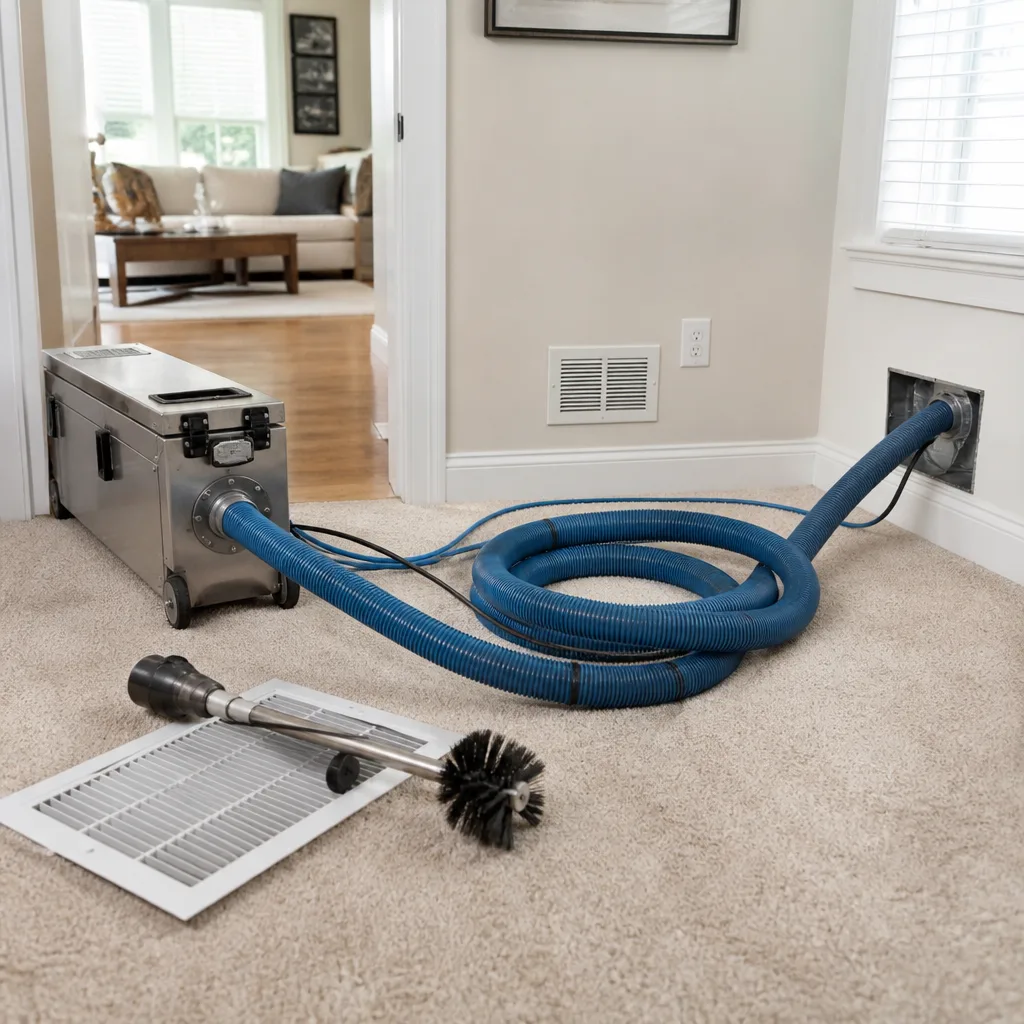 Whole-home duct cleaning
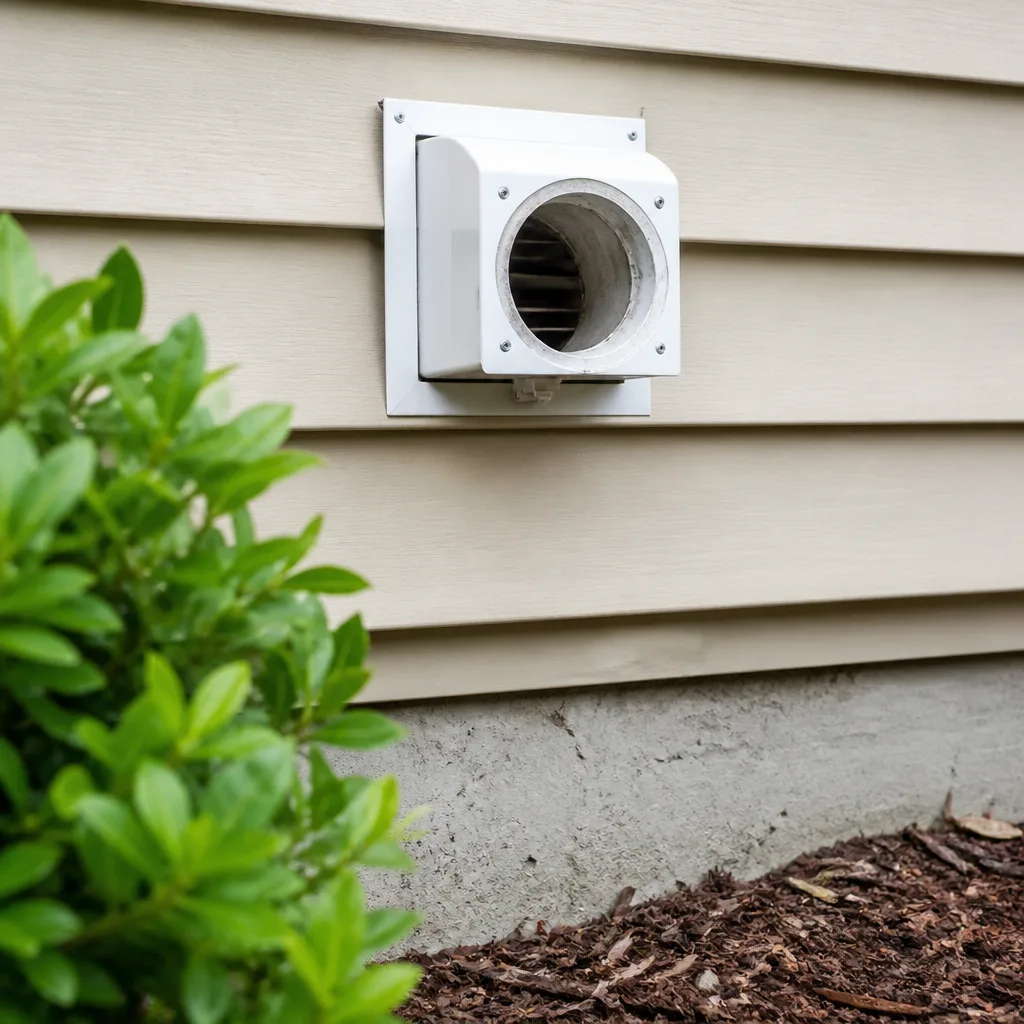 Dryer vent cleaning
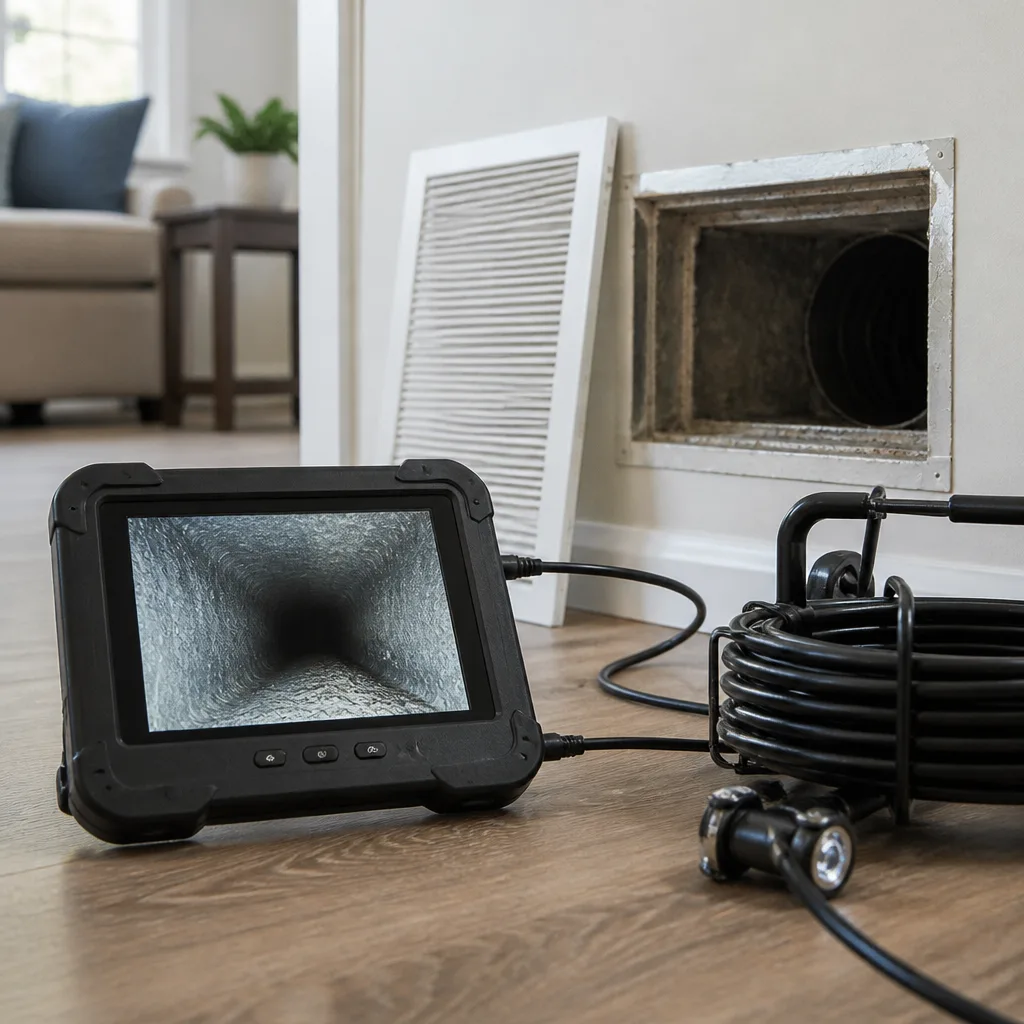 Camera inspection
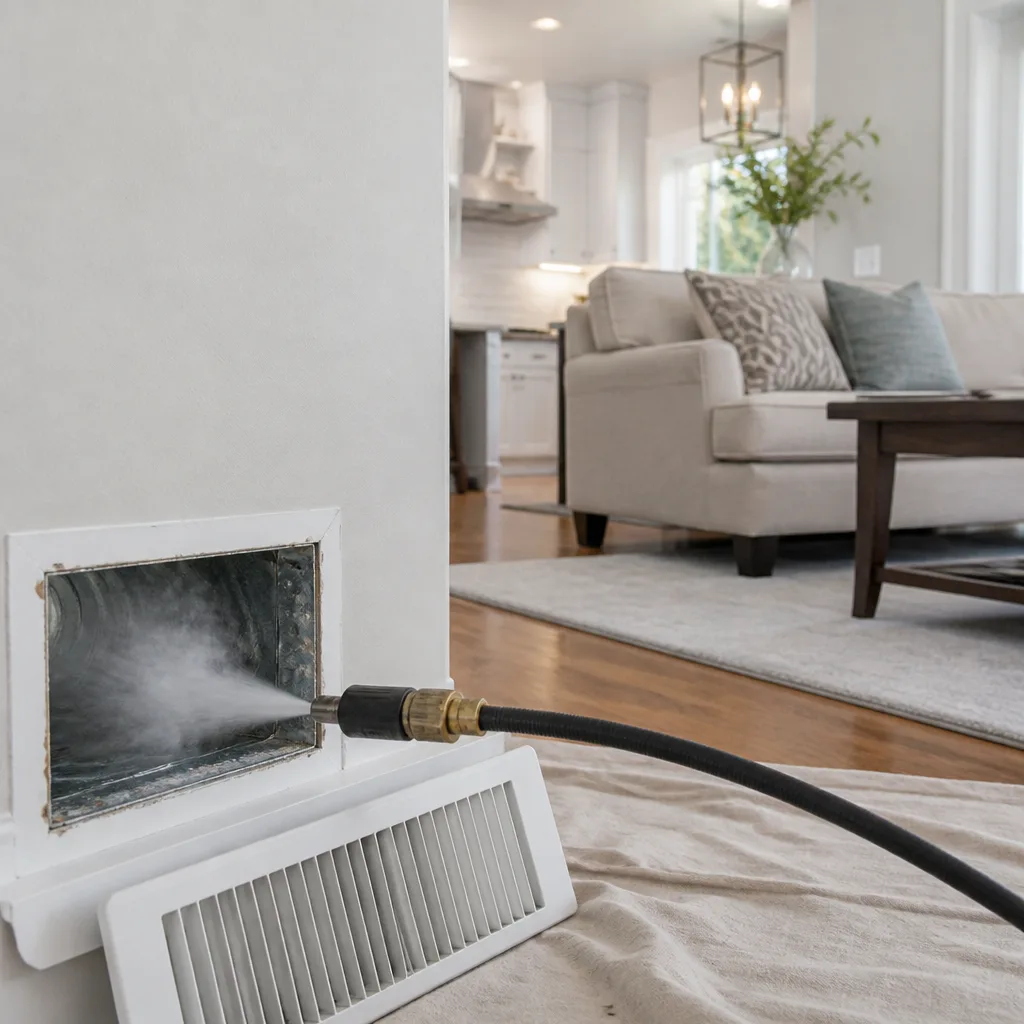 Sanitizing & deodorizing
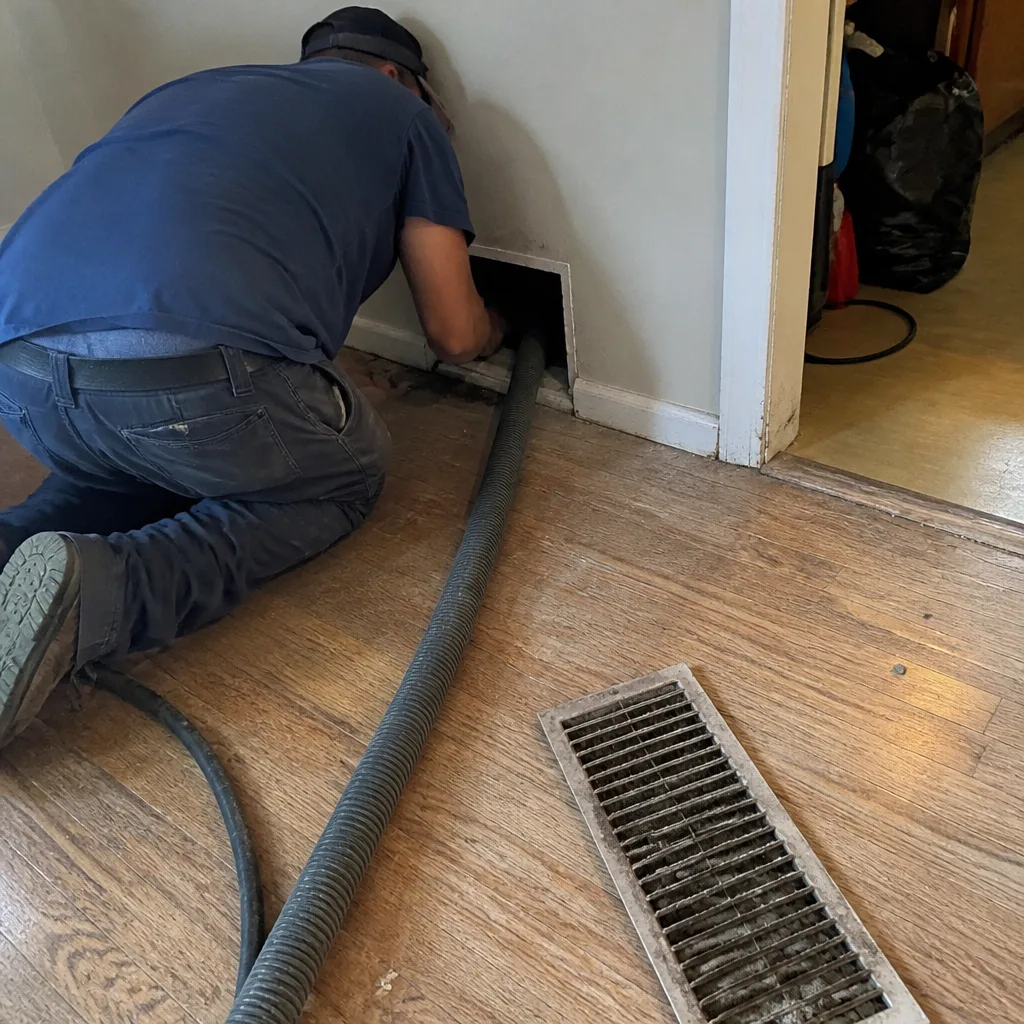
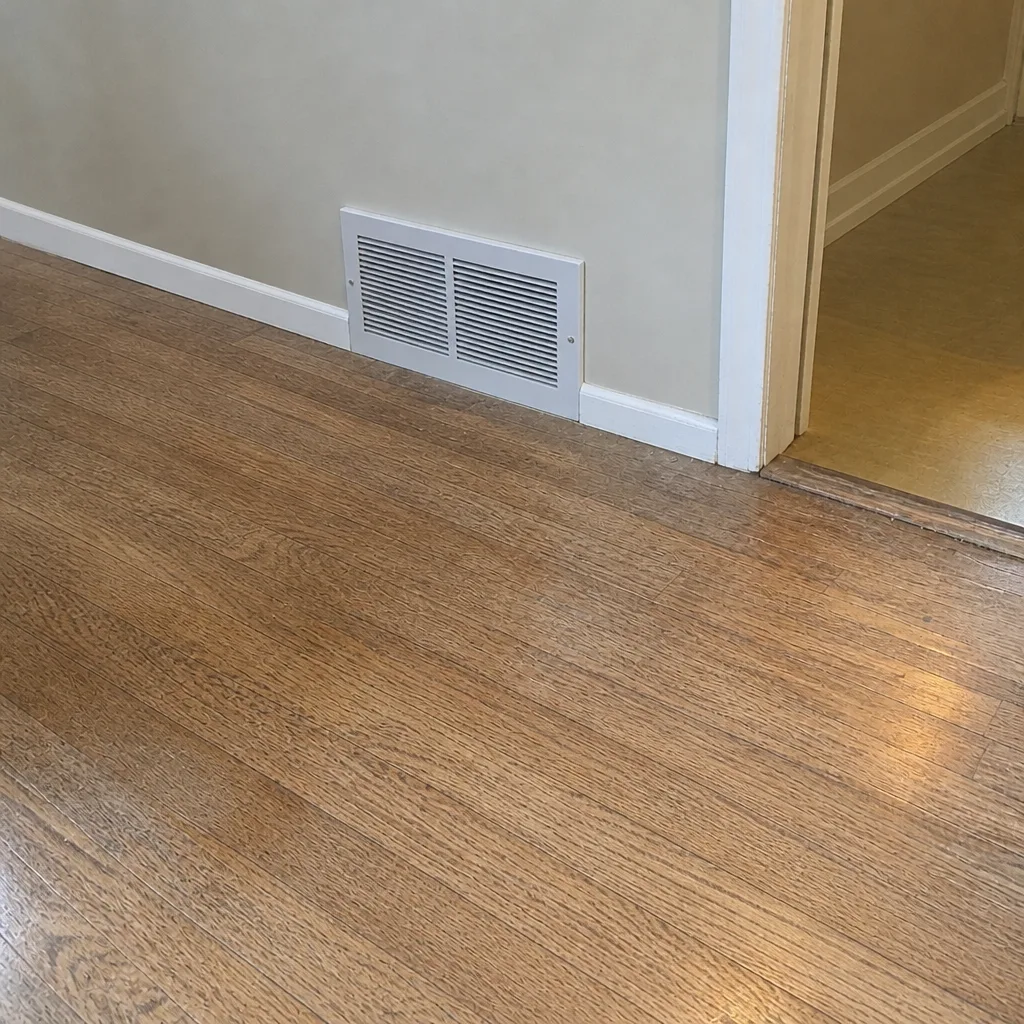
Whole-system duct and dryer vent check with before-and-after photos - you see exactly what came out of your vents
That "$99 whole-house special" is a bait ad - the real number appears once they are in your hallway, or the "clean" is a shop-vac at the register. We photograph the inside of your ducts before and after instead.
Air Duct Cleaning Troubleshooting in Parkside: Common Problems and How to Fix Them
If your HVAC contractor has already replaced the filter, checked the refrigerant, and tuned the blower twice, but your house still smells faint, heats unevenly, or collects dust faster than it should, the equipment usually isn’t the problem. The duct system is the undiagnosed variable, and it’s the one most homeowners never think to inspect. A duct network is a supply-and-return circuit with joints, boots, dampers, insulation, and flex runs tucked behind drywall, and any one of those components can fail quietly for years. This guide shows you how to read your system’s symptoms the way a technician does, separate a dirt problem from a leak problem, and know exactly what to ask before you book anyone in Parkside. You’ll finish with a clear map from symptom to cause to fix.
Quick Answer
Most air duct problems in Parkside trace back to one of four causes: accumulated particulate, disconnected or unsealed joints, collapsed or undersized flex duct, or missing insulation on runs through unconditioned space. Cleaning fixes the first. Repair and sealing fix the other three, and no amount of cleaning will solve a leak. Reading the symptom correctly is what determines whether you need a cleaning, a repair, or both.
Styles & brands we work with
- Whole-home duct cleaning
- Dryer vent cleaning
- Camera inspection
- Sanitizing & deodorizing
Table of Contents
- Symptom-to-Cause Map: What Your House Is Telling You
- Dirty Ducts vs. Leaking Ducts: How to Tell the Difference
- What Negative Static Pressure Means and Why You Should Ask For It
- Why Cleaning Alone Fails on Disconnected, Collapsed, or Uninsulated Ducts
- The Full-System Inspection Sequence (And What to Expect)
- Persistent Odor: Tracking Down the Real Source
- Post-Renovation Duct Problems in Parkside Homes
- Seasonal Shifts and What They Reveal About Your Ducts
Symptom-to-Cause Map: What Your House Is Telling You
Duct problems announce themselves through four channels: airflow, odor, dust, and noise. Each channel points to a different family of causes. When you learn to map them, you save yourself a lot of guesswork and a lot of unnecessary money spent on the wrong service.
Here’s how we break it down for homeowners in Parkside:
- Weak airflow at some registers but not others. Usually a damper issue, a disconnected branch run, or a crushed flex duct feeding that room. Rarely dirty ducts on their own, since dirt settles evenly across the network.
- Weak airflow everywhere. Often undersized return ductwork, a filter that’s too restrictive for the blower, or a return path that’s blocked by furniture or a closed door.
- Persistent musty or dusty odor. Points to moisture or biological growth inside the duct lining, a dead animal in a return chase, or contaminated insulation in the air stream.
- Chemical or combustion-like odor. Not a duct cleaning problem. Shut the system down and call for a diagnostic right away.
- Excess dust on surfaces near registers. Typically a supply boot that’s unsealed at the drywall penetration, letting attic or wall cavity air get pulled into the supply stream.
- Whistling or whooshing at registers. High static pressure from restricted airflow, usually a filter or return issue rather than a cleaning issue.
- Rattling or popping in the walls. Loose flex duct vibrating against framing, or a damper that’s not seated.
Most homes we inspect in Parkside show two or three of these at once, and that’s normal. A slow leak at a supply collar adds dust near the register and reduces flow to the room, so the symptom trail gets tangled. The fix is to start with the biggest signal and work through the inspection sequence in order.
Dirty Ducts vs. Leaking Ducts: How to Tell the Difference
This is the single most important distinction in duct troubleshooting, and it’s the one most homeowners get wrong. Dirty ducts and leaking ducts produce overlapping symptoms, but they need completely different work. Cleaning a leaky system is like mopping under a dripping pipe: you’ll get a short-term improvement, then the same problem returns.
Dirty duct tells
Dirt announces itself as an even, gradual problem. You’ll see dust accumulating at every register in the house, not just a couple. The blower compartment shows visible debris. The return grille has a fuzzy coat. And the dust layer builds up over weeks and months rather than appearing overnight. That even distribution matters, because dirt that only shows up in one or two rooms is usually entering at a specific leak point, not circulating through the whole system.
Leaking duct tells
Leaks are localized. They show up as:
- Dust concentrated at one or two registers instead of all of them.
- Rooms that never reach setpoint no matter how long the system runs.
- Attic-smelling air at a supply register (a sign of a disconnected joint in the attic).
- Visible dust streaks at drywall penetrations or at the collar where flex meets a boot.
- Temperatures that swing widely between adjacent rooms.
In our experience across Parkside, home insulation and duct insulation matter here too. Ducts running through an unconditioned attic or crawl space lose heat in winter and gain heat in summer, so a leak on a run through that space introduces both air and temperature problems into the room. That’s why fixing the leak changes the comfort reading immediately, while cleaning a dusty-but-sealed system changes dust and air quality but not the temperature.
What Negative Static Pressure Means and Why You Should Ask For It
Static pressure is the resistance your blower has to push against. A technician measures it with a manometer at the supply plenum and the return plenum. When the return side reads strongly negative (say, well below the plenum pressure on the supply side), it means the blower is fighting for air. That’s a duct system problem, not an equipment problem, and it’s a huge diagnostic shortcut.
Why does it matter to a homeowner? Because if the blower is straining, several things happen at once:
- The evaporator coil runs colder than it should, which can freeze the coil in summer.
- The heat exchanger in a furnace runs hotter than designed, which shortens its life.
- The blower motor works harder, which can shorten its lifespan or trip limits.
- Air gets pulled into the system through every unsealed joint and wall cavity on the return side.
You can’t measure static pressure yourself without a manometer, and you shouldn’t try. But you can ask for it. When you call a technician for any airflow or comfort complaint, ask: “Can you check static pressure on both sides?” Any competent professional will do this as a standard step. If they brush the question off, that’s useful information about the depth of their diagnostic.
In our experience, a lot of the airflow complaints we’re called about in Parkside trace back to a return path that’s undersized or blocked, not to dirt in the supply side. Repairs on the return can involve adding a return register, enlarging a return trunk, or simply clearing an obstruction. None of these fixes happen with cleaning alone, which is why the static pressure reading comes first.
Why Cleaning Alone Fails on Disconnected, Collapsed, or Uninsulated Ducts
Cleaning is a maintenance service. It removes accumulated particulate from inside the duct surfaces and brings the interior back to source condition. That’s genuinely valuable, and it’s one part of what we do with equipment from Rotobrush and Nikro. But cleaning is not a repair, and it cannot fix mechanical defects. Here’s why each defect type resists a pure cleaning solution:
Disconnected joints
A flex duct that has slipped off a collar at a supply boot, or a trunk line that’s separated from a plenum tap, will pour conditioned air into an attic or wall cavity. Cleaning the interior of that disconnected run does nothing to reconnect it, and all the air you’re paying for goes into the attic. In our experience, disconnected joints are the single most overlooked duct defect in Parkside homes, partly because they’re invisible without camera inspection or static pressure diagnostics.
Collapsed flex duct
Flex duct that’s been kinked, crushed under insulation, or pinched between framing loses its cross-section. Airflow drops sharply. Cleaning can’t restore a duct that’s physically collapsed. The fix is a reroute or a replacement of the run, which is why our Duct Repair & Sealing service exists alongside cleaning, not as an upsell but because it addresses a different class of problem.
Missing insulation on unconditioned runs
Duct runs through an unconditioned attic or crawl space carry supply air at a temperature well below or above room temperature. If the insulation is compromised, you get condensation on the duct in summer and heat loss in winter. Cleaning doesn’t fix this. What does is re-insulating the run, and typically sealing the joints first so no air escapes into the insulated chase.
This is exactly where treating the whole air delivery system matters. A cleaning-only provider handles the dirt but hands you a referral for the repair. Our full-system approach through duct repair and sealing addresses the root cause in the same visit, using the professional-grade equipment that containment and sealing work actually requires.
The Full-System Inspection Sequence (And What to Expect)
A thorough inspection follows a specific sequence. Knowing the order matters because it tells you what a proper inspection looks like, and what to ask for if a provider wants to skip straight to the cleaning.
- Visual walkthrough and register survey. Every supply and return register gets checked for airflow, visible dust patterns, and temperature consistency. The technician notes room-by-room asymmetries because those are diagnostic.
- Air handler and plenum inspection. Blower compartment, evaporator coil face, filter slot, and supply plenum are inspected for debris, microbial growth, and connection integrity.
- Static pressure measurement. A manometer reads pressure at the supply plenum and the return plenum. This is the objective number that tells you how hard the blower is working.
- Duct runs inspection (attic, crawl, or basement). Each accessible run is checked for disconnections, crushed sections, missing insulation, and sagging. In Parkside homes with attic or crawl ductwork, this is where most defects surface.
- Camera inspection. Where accessible runs can’t tell the whole story, a camera is fed into the duct to see the interior surface condition and identify hidden defects.
- Containment setup for cleaning. If cleaning is warranted, the work area is contained with negative-pressure filtration so that loosened particulate doesn’t circulate back into the home. This is the protocol level that Abatement Technologies equipment is designed for, and it’s why we use it on every cleaning job.
- Rotary brush or air whip cleaning. Supply and return runs are cleaned with rotary equipment (Rotobrush or Nikro systems) matched to the duct material. Flex duct and rigid metal call for different approaches.
- Repair and sealing (if defects were found). Disconnected joints get reconnected and sealed. Crushed runs get rerouted or replaced. Missing insulation gets restored. Only then is the system closed up.
- Sanitizing (optional, when the inspection calls for it). Guardsman-brand products are applied where microbial growth or odor is present. This step is not automatic; it’s driven by what the inspection found.
- Post-cleaning verification and before-and-after photos. The interior condition is documented with photos so you can see what was actually done.
Ask for the sequence up front. A provider that jumps straight to step seven without steps one through five is skipping the diagnostics that determine whether cleaning is even the right service. That’s how homeowners end up paying for a cleaning that doesn’t solve their complaint. Our team walks through the full sequence on each air duct cleaning visit, and we’re happy to do the same on the HVAC cleaning side of the system when the air handler shows problems.
Persistent Odor: Tracking Down the Real Source
Odor complaints are the trickiest class of duct problem because the source can be several places, and the wrong service won’t fix any of them. In our experience helping Parkside homeowners, we break odor sources into these categories:
- Musty, damp, biological. Usually microbial growth on the evaporator coil or on wet internal insulation after a slow refrigerant or drain pan leak. Cleaning the ducts without addressing the coil does nothing. The coil has to be cleaned first.
- Dead animal in a chase or return. The odor is often localized to one area of the house, sometimes one floor. Duct cleaning can remove the source, but the chase or cavity might need access work to get the animal out.
- Chemical or solvent smell. Often traced to off-gassing from new building materials or stored products pulled into a leaky return. Sealing the return path fixes it; cleaning does not.
- Stale, dust-like smell at every register. This is the actual “dirty duct” odor, and it’s the one that responds to cleaning and sanitizing.
- “Hot smell” during heating season. Often a dust layer burning off the heat exchanger on first startup, which clears over a short period. If it persists, it needs an HVAC diagnostic.
One thing to know about Parkside in particular: our area swings from humid summers to cold, dry winters, and that cycling puts duct insulation through a lot of expansion and contraction. Insulation that was well installed can loosen over years, creating pockets where condensation forms and organic material accumulates. When we inspect a home in Parkside with a persistent musty odor, compromised insulation is one of the first things we check.
Post-Renovation Duct Problems in Parkside Homes
Renovation dust is its own category. Drywall dust, sawdust, and insulation fibers get pulled into the return air stream during a project, and depending on how long the system ran during construction, that material can coat the interior of the ducts, the blower wheel, and the evaporator coil. The symptoms show up as visible dust at the registers, a gritty smell, and sometimes a rattling blower as debris accumulates unevenly.
What we recommend for Parkside homeowners who’ve just finished a renovation:
- Have the system inspected before you start the cleaning, so you have a documented baseline of the pre-cleaning condition.
- Clean the entire system, supply and return, with containment and negative-pressure filtration running the whole time. This is where professional-grade equipment actually matters, because consumer tools can’t maintain containment on a large job.
- Inspect the blower wheel and coil during the cleaning. These are where dust settles and where a lot of post-renovation complaints originate.
- Change the filter immediately after, and check it again in a couple of weeks.
- If the renovation opened or moved any duct runs, verify the joints are properly reconnected and sealed. New construction openings are the most common source of post-renovation leaks.
We use Abatement Technologies filtration equipment on renovation dust jobs specifically because the containment protocol is what keeps the loosened particulate out of the living space during the work. It’s the same standard you’d expect in remediation-level work, applied to a residential cleaning job.
Seasonal Shifts and What They Reveal About Your Ducts
Some duct problems are always there; you just don’t notice them until the system runs hard enough to expose them. In Parkside, the transition from one season to the next is a diagnostic window. Watch for these patterns:
- Cooling season airflow complaints. Under-sized returns and crushed flex duct become obvious only when the blower is working at capacity. If a room is fine in winter and unbearable in summer, the return path is usually the issue.
- Heating season dust storms. The first few weeks of the heating season push dust that’s been accumulating in the ducts all summer into the living space. A visible cloud at the registers on first startup is a strong cleaning signal.
- Winter cold spots. Cold spots that weren’t there last winter often point to a leak or insulation failure that developed in the interim. Insulation on a duct run through an unconditioned attic can degrade over a single summer.
- Spring mustiness. The musty smell that appears as the weather warms is often microbial growth that survived the winter on the coil and just got warm enough to become noticeable.
These patterns aren’t accidental. They’re the way a duct system reveals its weak points once the load is high enough. If you’re seeing one of these, note the room and the time of year before calling a technician. That detail alone cuts diagnostic time substantially.
Common Mistakes to Avoid
- Cleaning without diagnosing. If you call for a cleaning without knowing whether the problem is dirt or a leak, you’re as likely as not to fix the wrong thing. Ask for the inspection sequence first.
- Assuming a filter change will fix airflow. A too-restrictive filter is a real cause of high static pressure, but so is a blocked return, a crushed flex run, and a closed damper. Change the filter once, note if anything changes, then call.
- Ignoring localized dust. Dust at one register and not the others means a leak, not a cleaning problem. Skipping the repair after the cleaning means the dust comes right back.
- Skipping insulation checks. Duct runs through a Parkside attic or crawl space without proper insulation lose efficiency every hour the system runs. Insist that the technician checks insulation condition on the run, not just the interior.
- Choosing the lowest bid without asking what it covers. The cheap quote often covers the visible duct sections and misses the air handler, plenum, and coil. Ask before you book what the price actually includes.
- Sanitizing as a default. Sanitizing is a targeted treatment for microbial growth or odor, not a routine step. If a provider wants to sanitize before they’ve inspected, ask why.
- Forgetting the dryer vent. The dryer vent is a duct too. Lint buildup is a fire risk and the same cleaning discipline applies. Add it to the checklist when a technician is on site.
See the difference
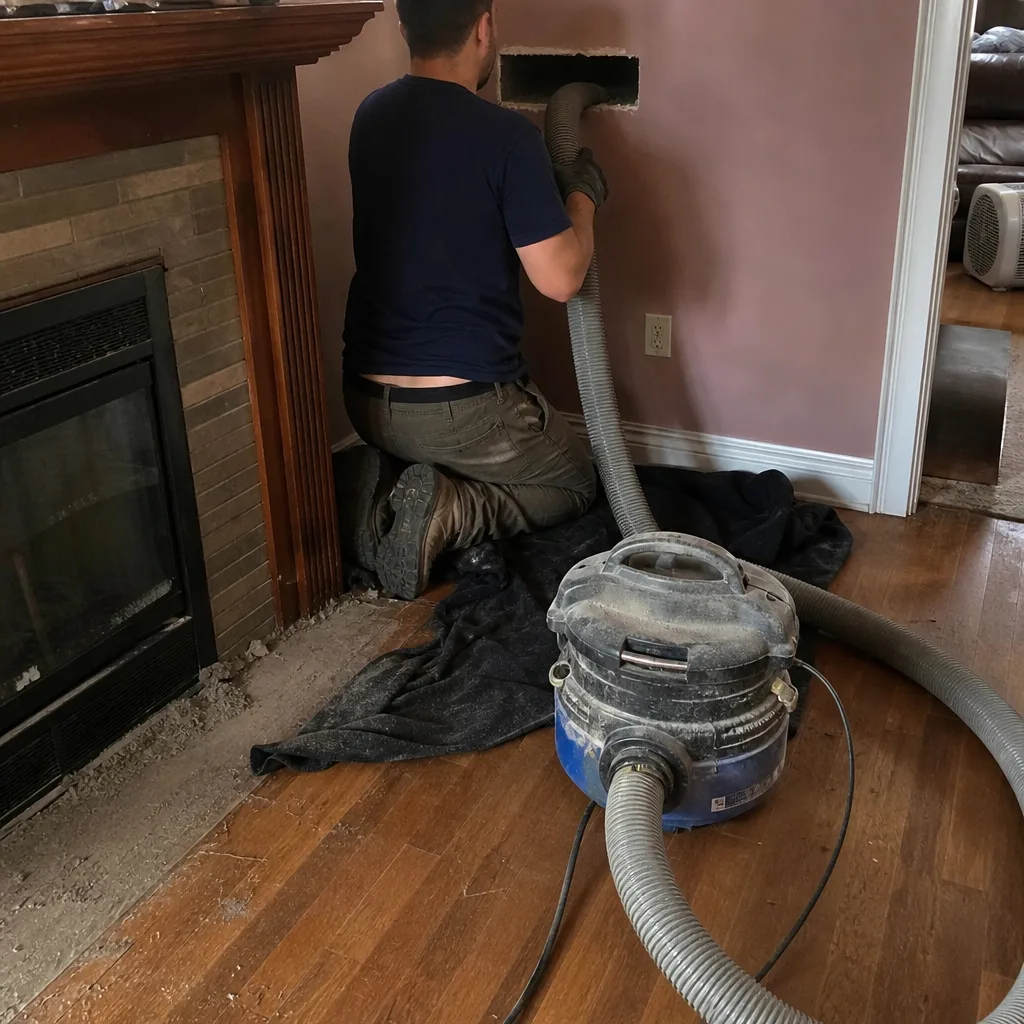 Before
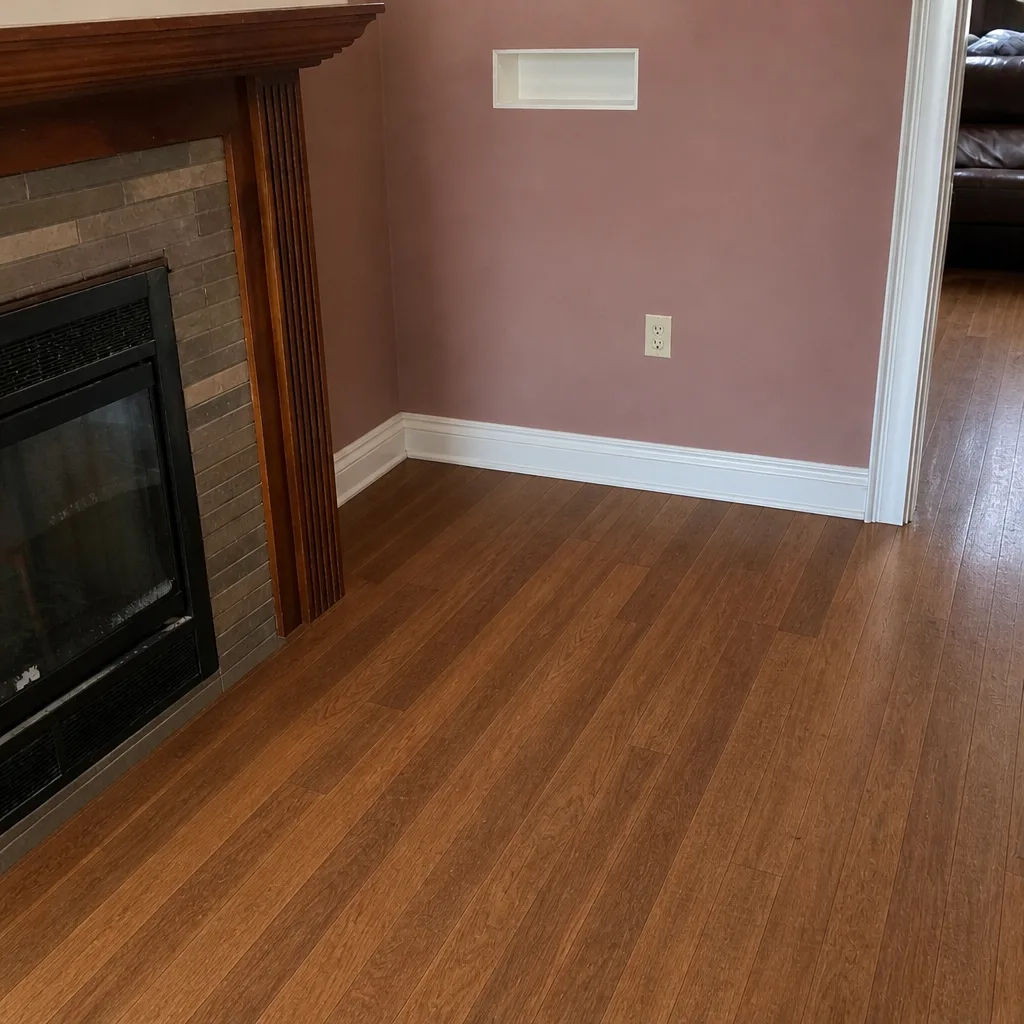 After
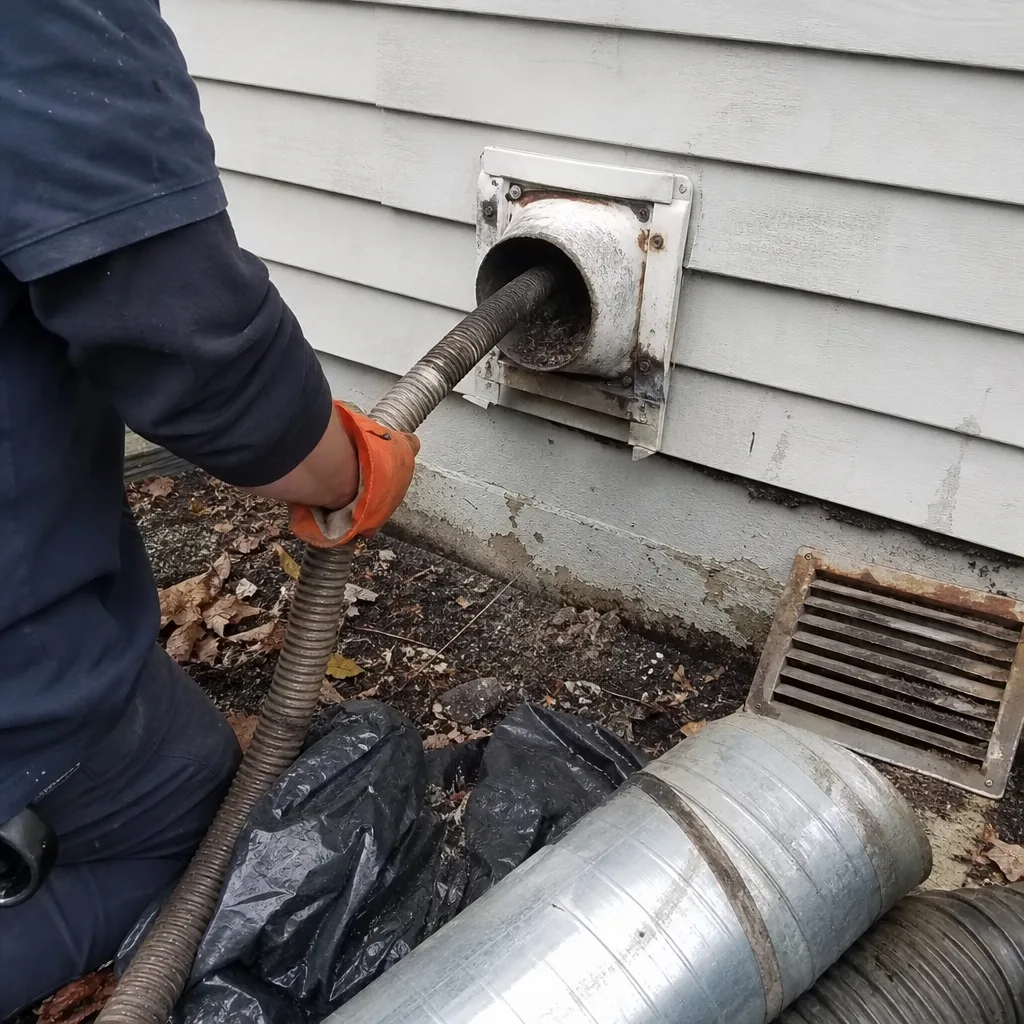 Before
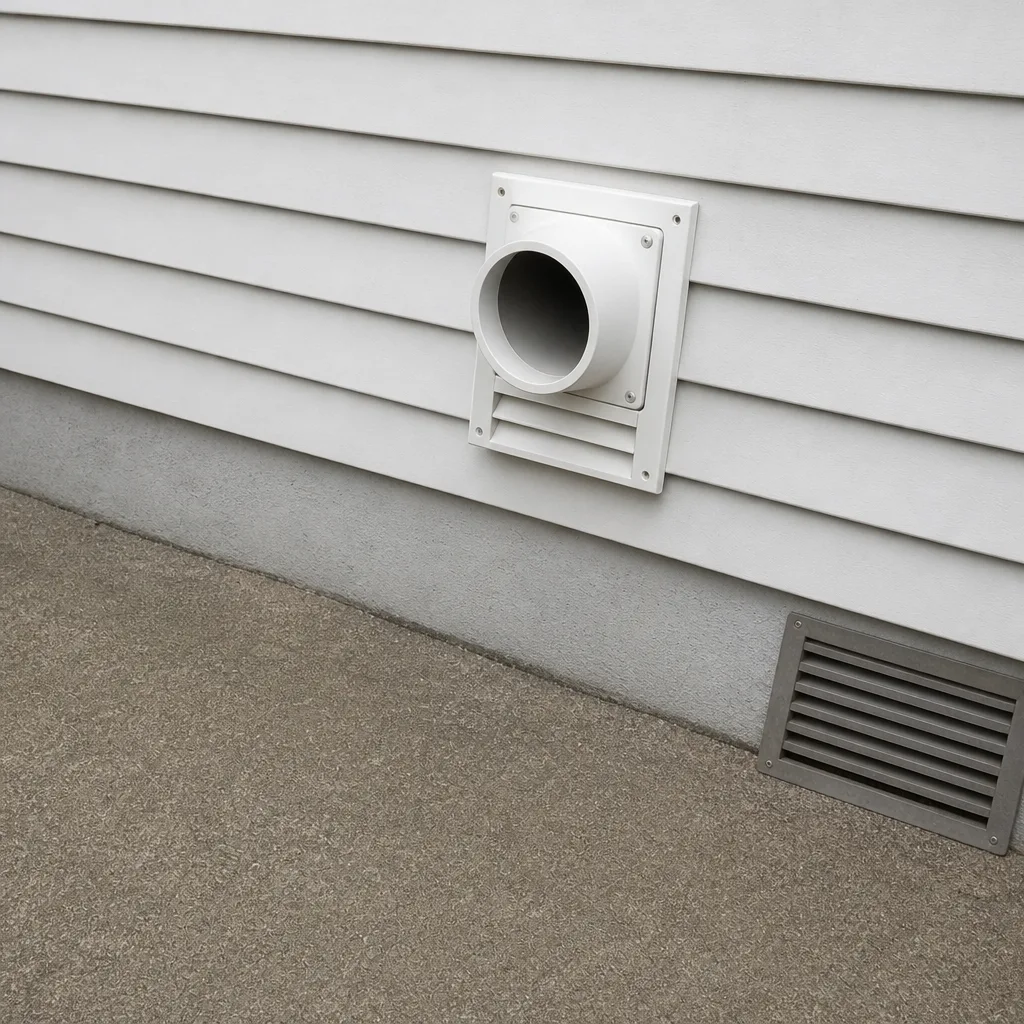 After
 Before
 After
When to Call a Professional
Some duct problems you can note and watch. Others you shouldn’t sit on. Call a professional if any of these are true:
- You smell combustion or a chemical odor and can’t immediately trace it.
- Your electricity bill has climbed without a change in use, and the HVAC unit itself has been checked.
- A room never reaches setpoint while adjacent rooms do.
- You see visible dust streams at a register, or dust streaks at the wall.
- You’ve just finished a renovation or moved into a home where the duct history is unknown.
- You notice a persistent musty smell at the registers, especially in warm weather.
Air Duct Cleaning Parkside offers free estimates in Parkside. Call (833) 482-5968. We answer 24/7. Fast dispatch from 7am to 7pm, Sunday through Friday. We’ll walk through the inspection sequence with you and tell you honestly whether you need a cleaning, a repair, or both. Our technicians have up to 13 years of experience, and the goal is to leave you with a system that works, not just a system that looks cleaned.
Frequently Asked Questions
Dirty ducts show even, gradual dust buildup at every register and a stale smell, and the fix is cleaning. Leaking ducts show localized symptoms: one room that never heats or cools, dust concentrated at one or two registers, or attic-smelling air at a specific supply. If the symptoms are asymmetric, the problem is a leak and cleaning alone won’t solve it. A proper inspection with static pressure measurement and camera access is what tells you which one you have. Call (833) 482-5968 for an exact quote. Estimates are free.
Yes, but the mechanism is usually through airflow restriction, not through dirt acting as insulation. A dust-clogged return or a dirty blower wheel pushes static pressure up, the blower works harder, and the system runs longer to reach setpoint. A restricted system also delivers less conditioned air per cycle, which means more cycles per day. The energy impact shows up as longer run times rather than a single obvious spike. If your bill has climbed and the unit has been checked, the duct system is the next place to look.
Negative static pressure is the pressure reading on the return side of the system, and a strong negative reading means the blower is fighting for air. You should absolutely ask for this measurement on any airflow or comfort complaint. Any competent technician measures both supply and return static pressure as a standard diagnostic step, and the number tells you immediately whether the return path is restricting airflow. If a technician won’t measure it, that’s a sign the diagnostic will be shallow.
If odor persists after cleaning, the source probably wasn’t in the duct interior. Common causes are microbial growth on the evaporator coil, a wet drain pan, contaminated insulation on a duct run, or a leaky return pulling crawlspace or wall-cavity air into the system. Each of these needs targeted repair work, not a second cleaning. The right next step is an inspection that looks at the coil, the drain pan, and the accessible duct runs, not just the interior surface. Call (833) 482-5968 to schedule the diagnostic. Estimates are free.
Parkside homes tend to follow the same patterns as much of the surrounding area: attic and crawl space duct runs that get less attention than they should, insulation that degrades through seasonal temperature swings, and post-renovation dust that outpaces the cleaning schedule. Homes with flex duct that runs through unconditioned space are the most likely to show airflow and temperature complaints over time. The specific defect still has to be found by inspection; the general pattern is just a starting hypothesis.
Every three to five years is a reasonable target for most homes, but the number that matters is your home’s specific conditions: pets, recent renovation, allergies in the household, or a move into a home with unknown duct history all justify a sooner look. The honest answer is to have the system inspected and let the inspection tell you. A provider who quotes a cleaning interval before inspecting the ducts is guessing. Call (833) 482-5968 for an honest assessment. Estimates are free.
If the dryer vent is part of the concern, our dryer vent cleaning page covers the lint buildup and fire risk side in detail.
The Bottom Line
Most of what feels like an HVAC equipment failure in a Parkside home is actually a duct system problem with a specific, findable cause. The shortcut is reading the symptom correctly first, then asking for the diagnostic that matches it. Even dust means cleaning. Localized dust, cold rooms, or air from the wrong space means a leak or disconnect. Whistling and low airflow mean static pressure. Persistent odor means the coil, the drain pan, or a duct leak, and none of those respond to cleaning alone. Get the inspection sequence right, ask for the static pressure reading, and verify the repair before booking a cleaning. That’s the whole game, and it’s the one we play every day on Air Duct Cleaning Parkside.
Call (833) 482-5968 for a free estimate. We answer 24/7. Fast dispatch from 7am to 7pm, Sunday through Friday. Our technicians have up to 13 years of experience, use professional-grade equipment from Rotobrush and Nikro, work with Honeywell and Aprilaire air quality systems, and handle containment with Abatement Technologies gear on every job.
Written by the team at Air Duct Cleaning Parkside.