
Last updated November 25, 2026
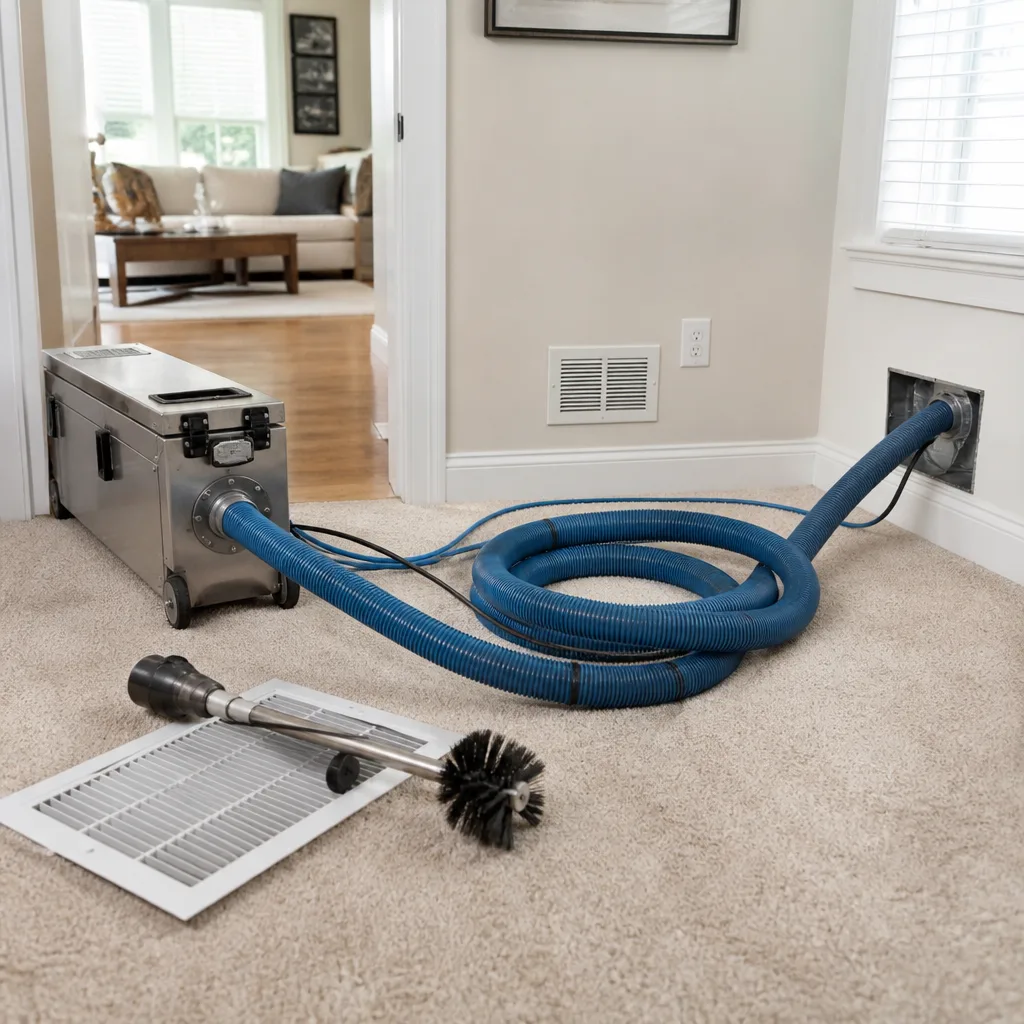 Whole-home duct cleaning
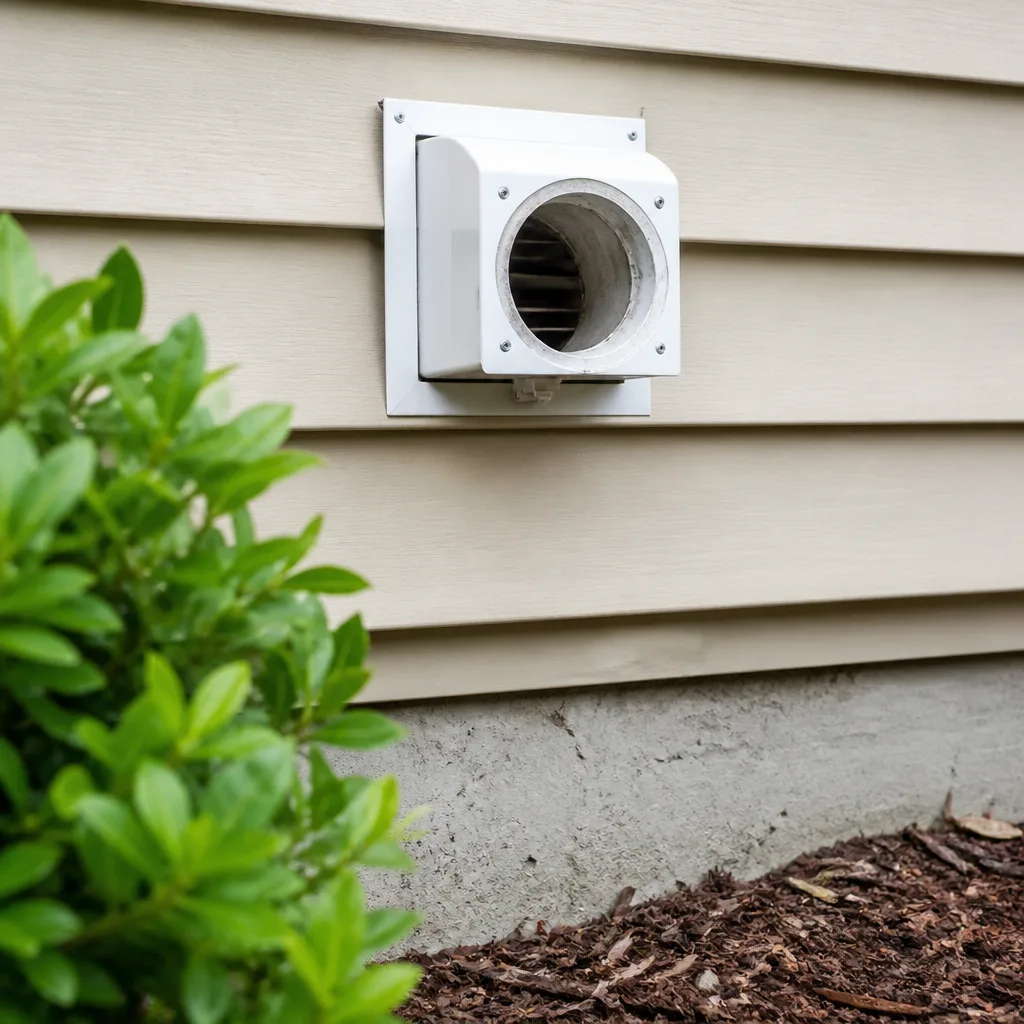 Dryer vent cleaning
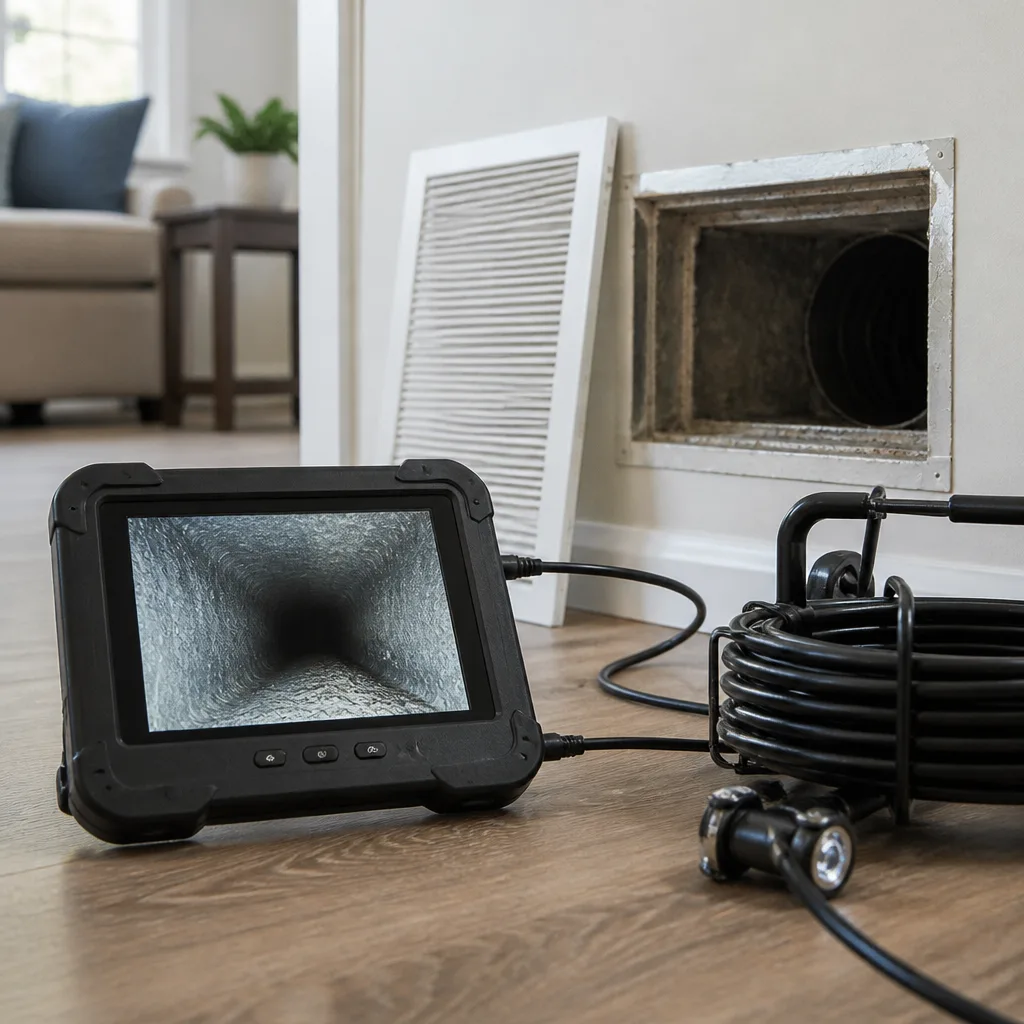 Camera inspection
 Sanitizing & deodorizing
Whole-system duct and dryer vent check with before-and-after photos - you see exactly what came out of your vents
That "$99 whole-house special" is a bait ad - the real number appears once they are in your hallway, or the "clean" is a shop-vac at the register. We photograph the inside of your ducts before and after instead.
Air Duct Cleaning Maintenance Checklist for Parkside Homeowners
Replacing your filter every 90 days while ignoring your supply plenum, flex duct connections, and return grille buildup is the HVAC equivalent of washing your car but never changing the oil. Most homeowners in Parkside track one number, the filter change date, and assume that covers the whole system. It doesn’t. A duct system has at least five points where contamination builds, airflow gets choked, or moisture starts a problem you can’t see from the register. This guide walks each component, tells you what a pass looks like and what a fail looks like, and shows you how to log what you find so a pattern becomes a diagnosis instead of a guess. Air Duct Cleaning Parkside works on these systems weekly, and the checklist below is close to how we think through a home.
Quick Answer
A working duct maintenance routine checks seven things on a recurring schedule: the filter (monthly to quarterly depending on the home), supply registers and return grilles for dust and airflow, the supply plenum for debris and moisture, the flex duct runs at their connections and bends, the drain pan for standing water, and the air handler and coil for buildup. Log what you find at each check. The goal is not cleaning more often than necessary; it’s catching restriction, moisture, or contamination before your system has to work harder to move the same air. For a full-system professional evaluation, a Parkside air duct cleaning assessment is the usual starting point for homes that haven’t been inspected.
Styles & brands we work with
- Whole-home duct cleaning
- Dryer vent cleaning
- Camera inspection
- Sanitizing & deodorizing
Table of Contents
- Filter Replacement and Airflow Logging
- Supply Registers and Return Grilles: What to Check
- The Supply Plenum: The Most Ignored Component
- Flex Duct Runs, Connections, and the Leaky Joint Problem
- Drain Pans, Coils, and Moisture
- Normal Dust Versus Biofilm, Mold Precursor, or Rodent Activity
- How to Log Findings So They Become Diagnostic Data
- When to Call a Professional Mid-Cycle
Filter Replacement and Airflow Logging
Filter replacement is the one maintenance task nearly every homeowner in Parkside gets right, but the interval is usually wrong. The 90-day rule applies to standard 1-inch fiberglass or pleated filters in a clean home with no pets. Tight filters and homes near construction or with heavy shedding pets need changing more often. Medium-MERV pleated filters in a thick-media cabinet often run six months. The proper interval isn’t the calendar; it’s the pressure drop across the filter.
Here’s what you can check without instruments:
- Visual inspection at 30 days. Hold the filter up to a light source. If you can’t see light through more than half the surface, it’s loading and needs replacement.
- Feel the supply air at the registers. On a running system, strong steady flow is normal. Noticeable weakness at one or two registers means either a filter problem or a return-side restriction.
- Note the date on the filter frame. Write the install date directly on the cardboard edge with a marker. That’s your log entry for the filter side of the checklist.
- Listen to the system at startup. Short cycling, a rattle at the air handler, or a humming return grille that vibrates more than usual are early airflow-restriction signals.
The point of pairing filter replacement with airflow checks is to catch restriction before it strains the blower. A filter that’s overdue is an obvious problem; a filter that looks fine while a return plenum is partially blocked is a problem nobody notices until the blower motor is paying for it. When you change the filter, walk two or three registers and note the airflow quality in your log. That’s the whole routine.
Supply Registers and Return Grilles: What to Check
Supply registers blow conditioned air into the room. Return grilles pull it back. Both are part of the visible duct system, and both show you what’s circulating. This is where most homeowners do their duct inspection, which is fine as long as you know what to look for.
Supply registers (pass/fail criteria):
- Pass: Light, even dust film on the louver blades, no dark streaks radiating from the gap around the register body, airflow is steady at every register on the same run.
- Fail: Dark soot-like staining around the louver edges (pressure leak), visible debris hanging on the louver blades, or one register that’s noticeably weaker than the others.
Return grilles (pass/fail):
- Pass: A thin lint film on the grille face is normal, especially in homes with carpeted rooms or shedding pets.
- Fail: Visible buildup on the return-side duct throat behind the grille (you can see it with a flashlight), musty smell when the system starts, or animal hair collected at the base of the grille in a way that suggests something has been up against it.
In Parkside’s older homes, the return grille is often the highest-deposit point in the system because the return runs are often undersized or have more length than the supplys. If you check nothing else on a recurring schedule, check the return grilles. And if you’re seeing that kind of upstream buildup, that’s the same signal our air duct cleaning visits start from. The technician takes apart each register, checks the throat, and documents what’s behind the grille so you know where your contamination is coming from.
The Supply Plenum: The Most Ignored Component
The supply plenum is the box directly above or beside the air handler where the main trunk duct connects. Every cubic foot of conditioned air passes through it. It’s also one of the two or three places contamination concentrates fastest, and almost no homeowner looks at it because it’s inside the mechanical closet or utility space.
What to check, by component:
- Surface dust pattern. With the system running, a flashlight inside the closable plenum access shows you the pattern of dust layering. Even, thin gray dust is normal. Dark brown or black caked patches mean moisture is present.
- Seam integrity. Every factory and field joint in the plenum should be taped or sealed. If you can see a gap or foil tape peeling off, that joint is leaking conditioned air and drawing unfiltered air into the system at the same time.
- Condensation signs. Water staining on the sheet metal, whitish mineral marks, or rust at the plenum base indicate moisture that shouldn’t be there.
- Odor. Open the plenum access with the system off. A musty, earthy, or dirty-sock smell tells you that you’re past normal dust and into biological growth.
A plenum that’s caked with dark buildup is a mid-cycle professional call, not a filter-change-and-wait condition. The plenum is where much of what you clean depends on the cleaning equipment being able to reach it with containment. Our technicians use Air Duct Cleaning Parkside processes that include a rotobrush and vacuum configuration able to work the plenum and main trunk without breaking containment, which is one reason we start from the plenum rather than the register.
Flex Duct Runs, Connections, and the Leaky Joint Problem
Flex duct is the silver flexible pipe that carries air from the trunk to the registers in most residential systems. It’s the part of the system where two maintenance problems live: joints that pull loose and pipe that sags in a way that restricts flow.
What to check on each run you can reach:
- Connection at the trunk collar. The inner liner should be over the collar and zip-strapped tight. If you can see the collar itself with no liner over it, the run is leaking.
- Connection at the register boot. Same test at the room end. Loose connections there are the most common reason a room feels under-served.
- Sagging runs. Long stretches without a support strap pull down and create an area where condensation can form, and the sag lowers the effective duct diameter. A run that dips more than its own height is a problem.
- Outer jacket condition. Rips or tears in the silver jacket expose the insulation and let it wick moisture in. A wet jacket propagates.
- Rodent signs at the collar. Chewing, droppings near the boot, or small tears at a joint are the classic signs to look for. If you see any of them, stop inspecting and call a professional.
Leaky flex connections are silent performers. They don’t smell, they don’t make noise; they just send part of your conditioned air into the wall cavity and draw unfiltered attic or crawlspace air back into the supply side. When you find multiple loose collars, that’s usually a call for HVAC cleaning plus sealing rather than cleaning alone, because cleaning an unsealed system just means the next filter change date is closer.
Drain Pans, Coils, and Moisture
The drain pan sits under the evaporator coil and collects the condensate the system sheds. It’s also the number-one place where a clean-looking duct system starts growing something. Regular drain pan checks are more important than most homeowners assume.
Drain pan checklist:
- Pan should be dry outside the active cooling season and have only clean condensate during it.
- No standing water more than a thin film inside the pan after the system has been off for a few hours.
- No black, pink, or orange film on the pan surface (each indicates a different biological growth stage).
- Drain line should flow freely. If you can see the drain line exit, a small cup of water poured into the pan should drain through in seconds.
Evaporator coil checklist:
- Coil fins should be visible and light gray. Dark coating on the coil face is a call-the-professional condition.
- No insulation peeling away from the coil face or the plenum above it.
- Airflow through the coil should feel even side to side, not concentrated in one section.
Moisture is the single biggest driver of duct contamination in this climate, and moisture starts at the coil. A clean pan and coil mean your ducts stay cleaner between professional visits. Our Air Quality & Sanitizing and moisture-conscious work includes checking Honeywell and Aprilaire humidity control where the home has it, because the parts of the system people don’t see are the ones doing the most work on your air.
Normal Dust Versus Biofilm, Mold Precursor, or Rodent Activity
Dust is always present, and duct cleaning isn’t about eliminating it; it’s about keeping it as dust rather than letting it become biological growth or animal intrusion. Here’s how to tell the difference in a quick inspection:
- Normal dust: Uniform gray or light brown, dry to the touch, releases when you wipe it with a cloth, no smell. Caught up on grille faces, visible even deposit in the plenum.
- Biofilm or mold precursor: Dark patches that are sticky, damp, or clustered around moisture sources. Often with a musty smell from the plenum or return throat. Growth that reappears within weeks of cleaning.
- Rodent activity: Droppings, chewing damage at flex collars, shredded insulation, or persistent coarser hair at a single return grille. Different from pet hair in that it’s concentrated at a run or return and comes with a urine odor.
- Construction or renovation dust: Fine, uniform, drywall-white or sanding-dust coloring, no smell, usually after a recent project. The differentiating point is that it’s recent, not chronic.
- Smoke and soot film: Can be identified at the return throat as an even dark that wipes off on a cloth as a residue rather than dust.
Freshly renovated homes and homes with a recent bathroom or kitchen phase are the most common trigger for the third category. If the pattern returns quickly after cleaning, the cause is upstream and needs a repair route. Our duct repair & sealing work is often what keeps the source from re-contaminating the cleaned system. Where sanitizing is needed, we use Guardsman products as part of the treatment, matched to what the system actually has growing in it.
How to Log Findings So They Become Diagnostic Data
A checklist only becomes useful when you record what you find. A single observation tells you little; three dated observations tell you whether a condition is stable, improving, or escalating. Here’s the simple log most Parkside homeowners can keep:
- Column one: date. Every filter change and every register inspection gets a date.
- Column two: filter type and install date. Write the brand, the MERV if you know it, and the date on the frame and in the log.
- Column three: airflow note. Use simple words: strong, moderate, weak. Note which register(s) you checked.
- Column four: visible condition at each check point. “Return grille: light film.” “Supply plenum: dark line at joint.” “Drain pan: clean.”
- Column five: smell. No smell, musty, damp. Note which point you smelled it from.
- Column six: action taken. Filter changed, joint re-taped, air quality system checked, call scheduled.
The value shows up when the pattern resolves. “Musty smell every six weeks from the same return” is diagnostic. It’s a moisture source with a seasonal trigger. “Plenum buildup returning in under 60 days” is diagnostic. It’s either a bypass leak or a biological load the cleaning didn’t fully address. Without the log you have a memory; with it you have a pattern, and a pattern points to the actual fix.
When to Call a Professional Mid-Cycle
Some findings can wait for a scheduled cleaning. Others shouldn’t. Call for a professional inspection when you find any of the following:
- Dark, damp, or sticky buildup in the supply plenum, return throat, or on the evaporator coil.
- A musty or earthy smell that returns within weeks of a filter change.
- Rodent droppings, chewing, or torn flex connections found during inspection.
- Visible standing water in the drain pan, or a pan that keeps wetting after the system shuts off.
- Two or more loose flex joints, or a run that has collapsed or torn its jacket.
- Airflow at one register that stays weak after a filter change, with no obvious upstream blockage.
These are conditions our technicians with up to 13 years of experience treat as diagnostics rather than routine cleanings. If you’re not sure whether a finding crosses the line, a free estimate from Air Duct Cleaning Parkside is the middle step. That conversation is usually about containment: using Abatement Technologies equipment and a proper filtration setup before the vacuum goes on the system is what separates a real cleaning from a dust-stirring exercise, and a mid-cycle call needs that level of care.
Common Mistakes to Avoid
- Assuming a filter change is duct maintenance. A filter only catches what reaches it. Debris in the plenum and the flex runs never contacts the filter, so 90-day filter changes can coexist with a heavily fouled supply side for years.
- Inspecting only registers and grilles. Registers and grilles are the visible edge of the system. The plenum, coil, and drain pan are where most of the real condition lives in Parkside homes, and the conditions found there drive the cleaning plan.
- Vacuuming the registers with a shop vac. Consumer vacuums don’t have the containment or the pressure differential to move debris out of the system; they can push particles deeper into the return run and the coil.
- Ignoring one weak register. A single under-performing supply point usually points to a disconnected flex collar or a collapsed run, not a dirty register. Treat it as a diagnostic finding.
- Cleaning without repairing leaking joints. Cleaning an unsealed system just gives the leaks a fresh start. In older homes near the co-op and multi-family buildings around Parkside, shared-wall duct runs leak into cavities and pull unconditioned air into the supply side. Duct repair & sealing is the actual fix.
- Keeping no log. Without notes, you can’t tell if a condition is chronic. Recurring moisture or the same debris type at the same location is the diagnostic signal. No log, no pattern.
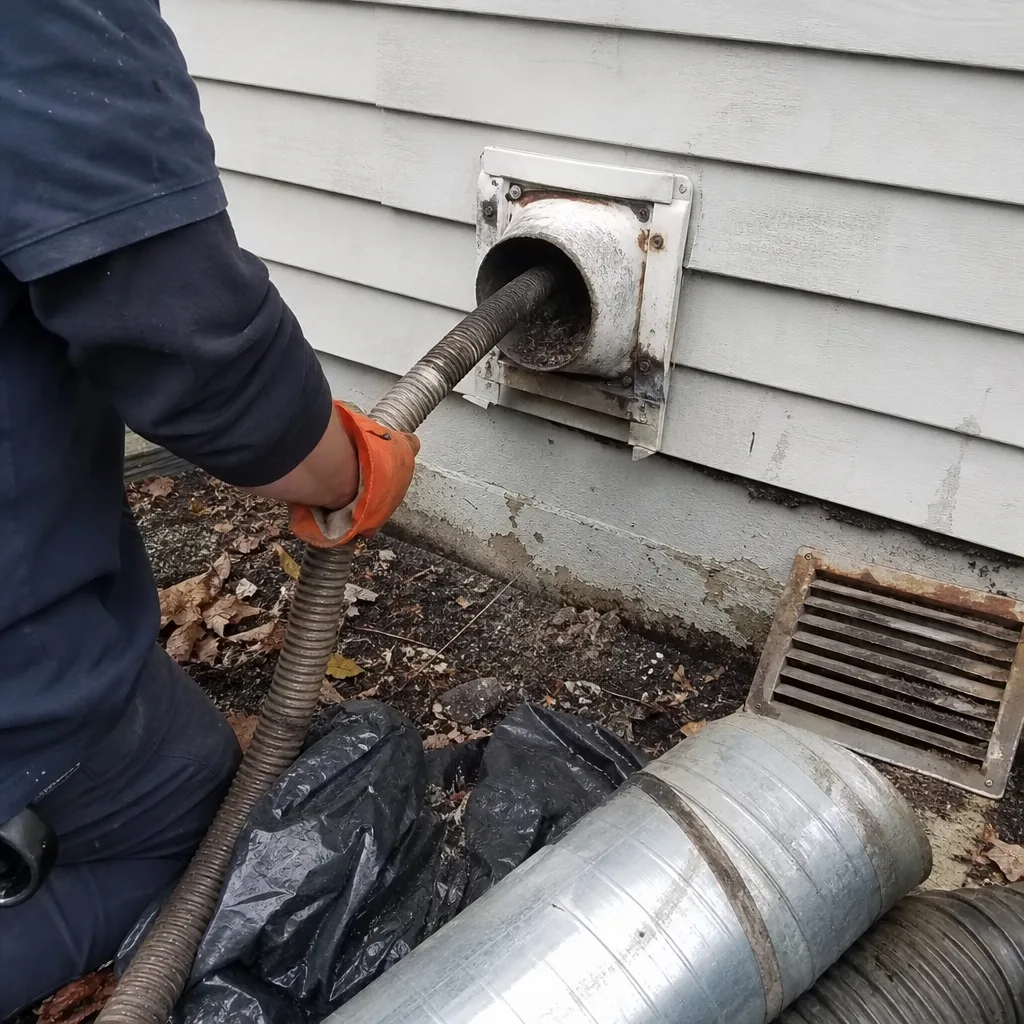
- Skipping dryer vent checks. The dryer vent isn’t the duct system, but it’s part of the air delivery envelope and its own maintenance cycle. Lint accumulation is a fire risk; a clogged vent also strains the dryer. dryer vent cleaning belongs in the same log.
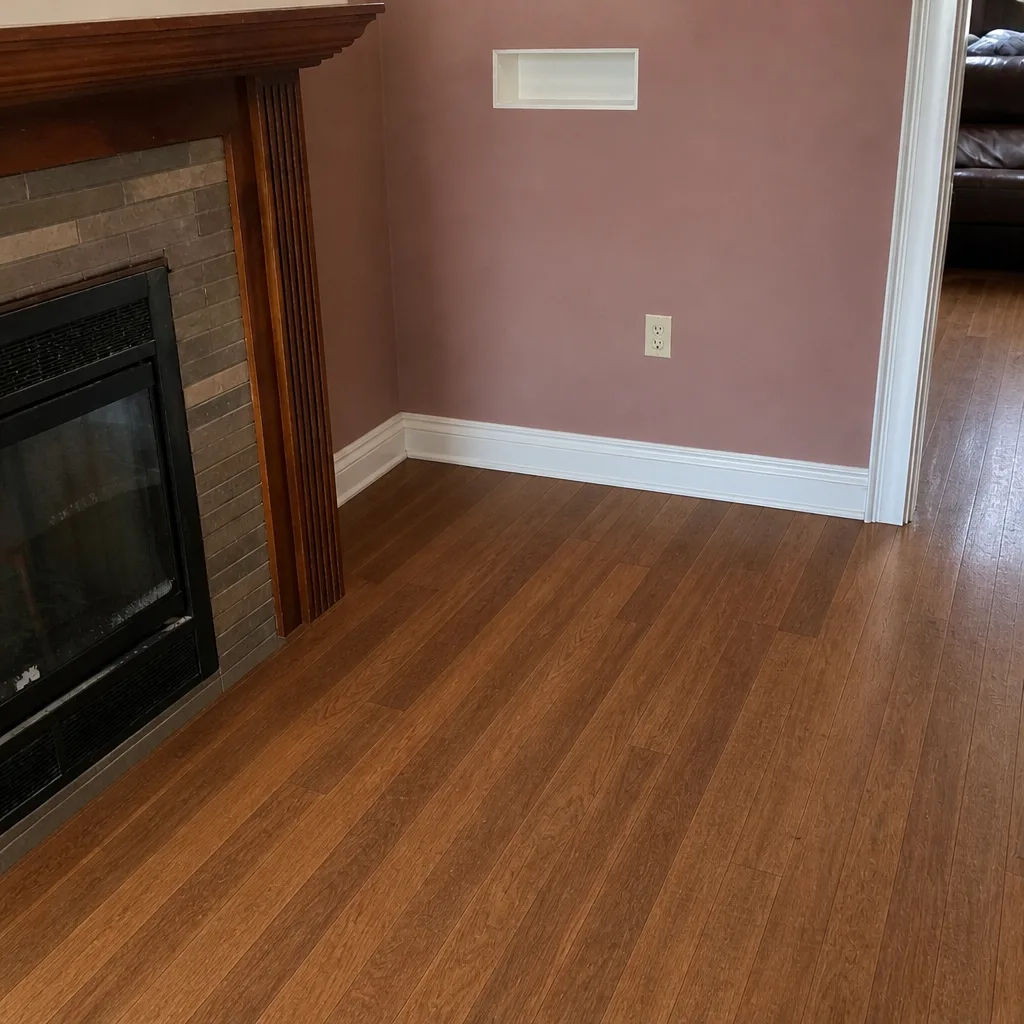
See the difference
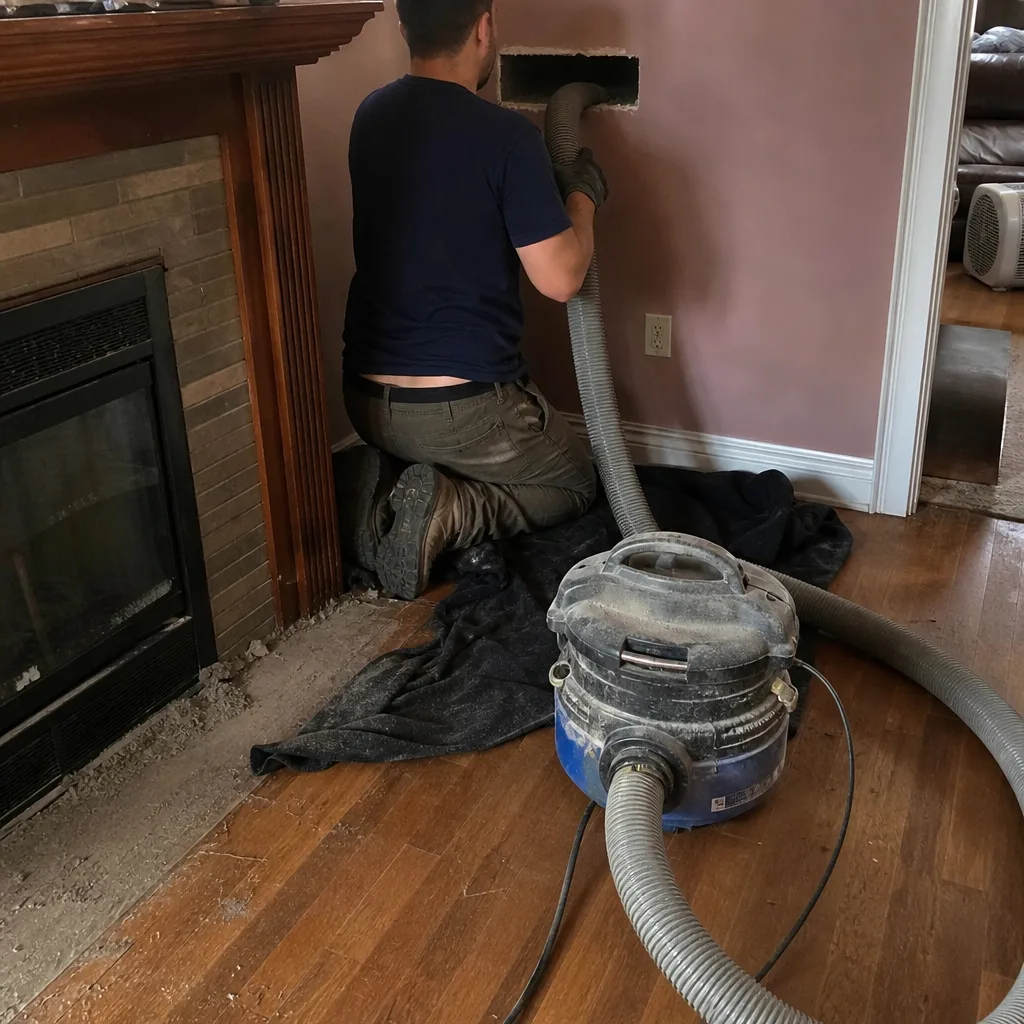 Before
 After
 Before
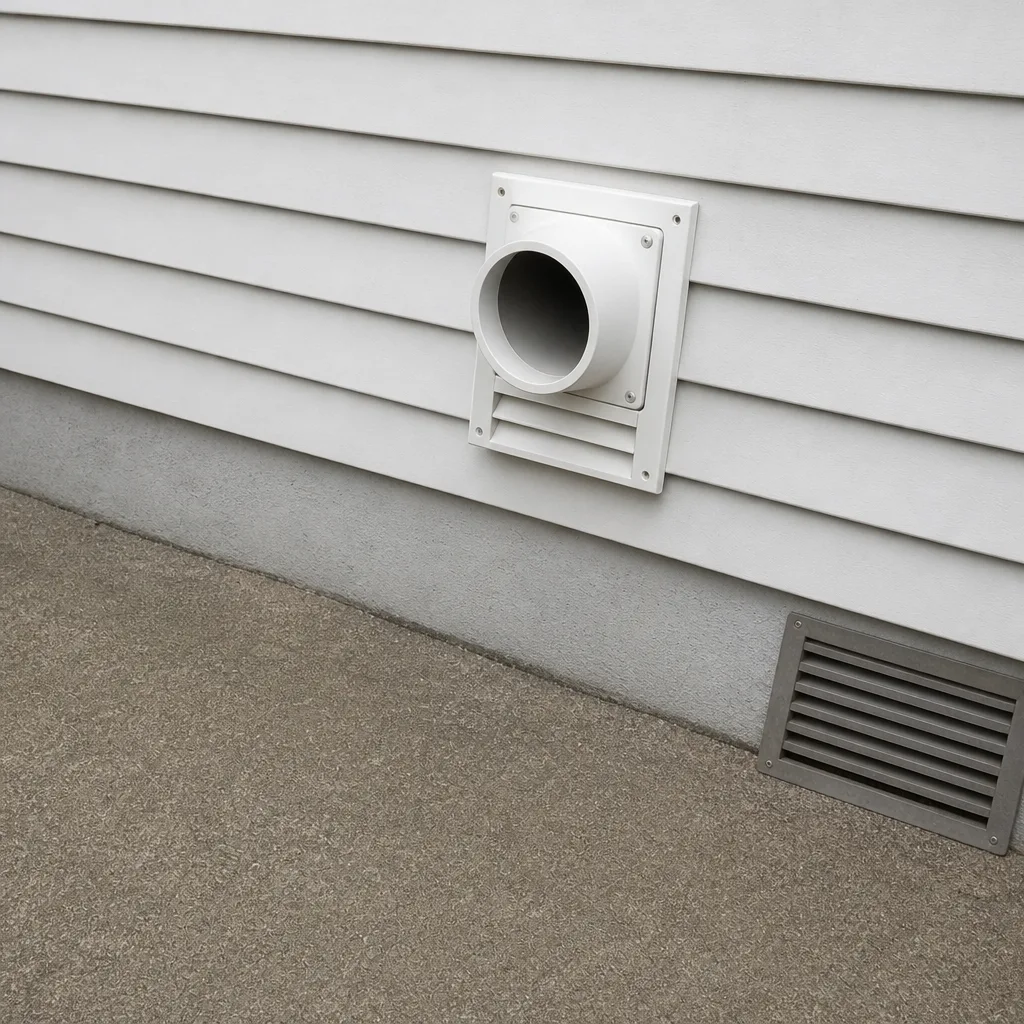 After
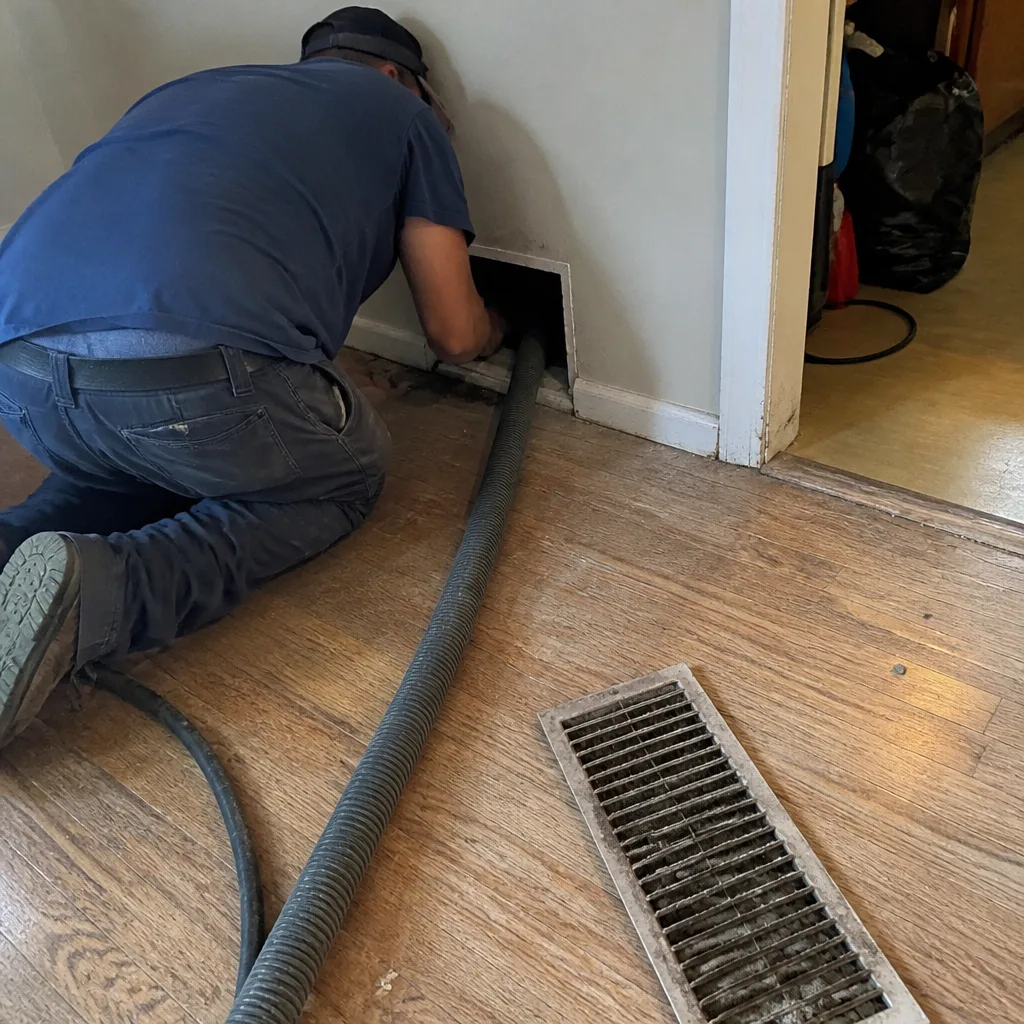 Before
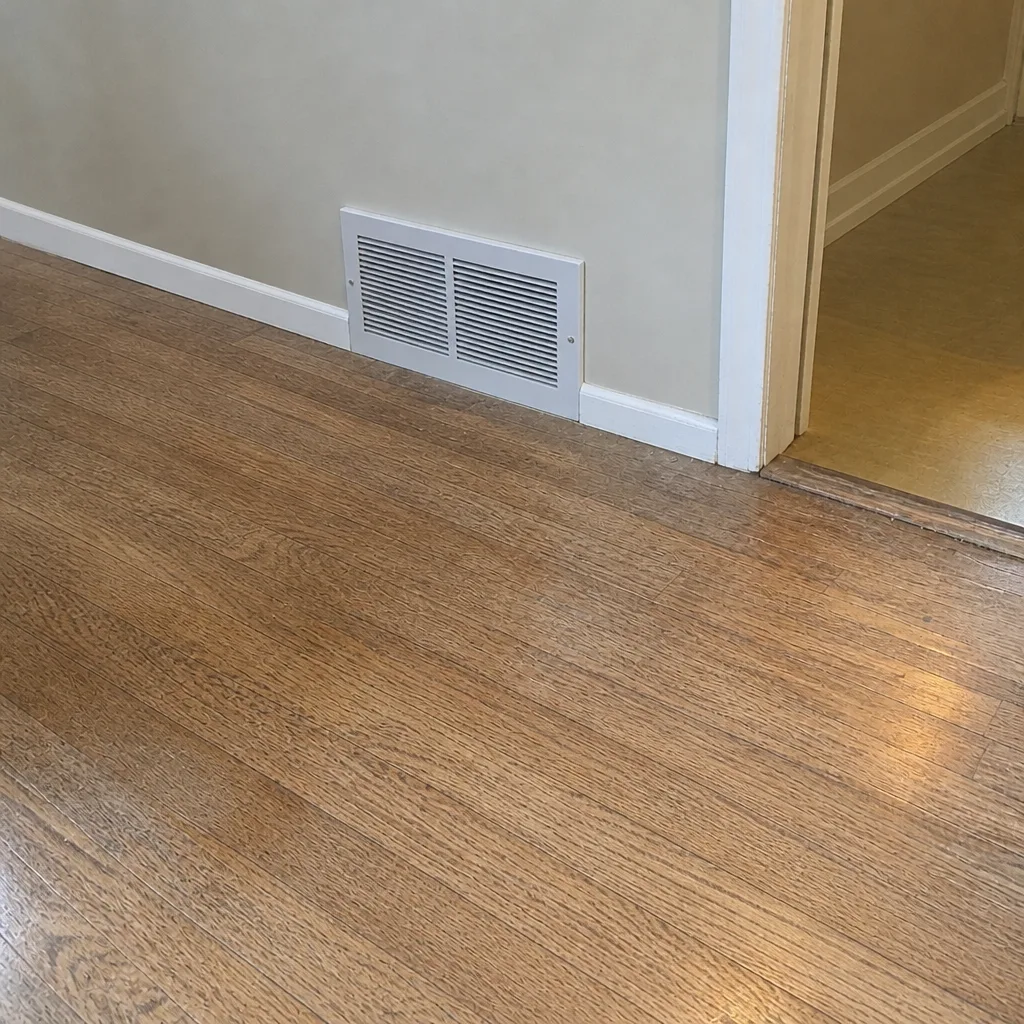 After
When to Call a Professional
The cases that need a professional rather than a homeowner check fall into three groups: biological growth (dark, damp, or smelly buildup anywhere in the system), moisture you can’t explain from the drain pan, and physical damage to flex runs or plenum seams. If you find any of those, or if cleaning the system and not sealing it hasn’t changed the pattern, that’s a call for a real evaluation. The right sequence is inspection first, then cleaning matched to the condition, then repair and sealing to close what allowed the contamination. Laundering the register grilles in a home near the Parkside blocks doesn’t fix a plenum bypass leak, and it shouldn’t be sold as if it does. Air Duct Cleaning Parkside offers free estimates in Parkside – call (833) 482-5968. We answer 24/7. Fast dispatch from 7am to 7pm, Sunday through Friday.
Frequently Asked Questions
The general answer is every three to five years for most homes, with exceptions. Homes with pets, someone with allergies or asthma, recent renovation dust, or visible mold near registers often need a shorter interval. Our recommendation is to start with a professional inspection and let the findings set the interval rather than the calendar.
Most whole-system cleanings in this market fall in a few hundred dollars for a standard single-family home, with larger or more fouled systems running higher, and the written estimate is what sets the final price. We don’t quote per-register prices; the system is priced as a system. Call (833) 482-5968 for a free estimate – estimates are free.
Price differences usually come from equipment and containment, not the size of the home. Cheap quotes often use a shop-vac pressure setup with no containment, no plenum access, and no repair capability, and that’s a dust-stirring job rather than a cleaning. Our quotes are built around Rotobrush and Nikro equipment, Abatement Technologies containment, and the ability to seal what we find. Call (833) 482-5968 and we’ll walk through what a quote covers.
Ask for before-and-after photos of your own system and a written summary of what was cleaned. A professional service should be able to show you the supply plenum and return throat condition before and after, tell you what was found, and note anything that needed sealing. If the provider can’t produce photos and a summary, ask why.
Yes, and you should. Register and grille inspections, filter checks, airflow notes, and drain pan condition can all be checked without any tools beyond a flashlight and a marker. Leave anything at the plenum, coil, or inside a flex run to a trained technician, and never open a plenum access with the system running.
Not necessarily. Musty odors often come from the drain pan, the coil, or a leaking flex joint before they come from ducts themselves. But it’s a signal that moisture is somewhere the system is exposed to, and it needs a moisture source diagnosis rather than a filter change. When in doubt, book an inspection specifically for the smell and note when it shows up.
The Bottom Line
The checklist that works is the one matched to the actual failure points: filter loading tracked with airflow notes, register and grille checks at each filter change, plenum inspection for buildup and moisture, flex connection checks for loose collars and torn jackets, and a drain pan and coil check on the same schedule. Log what you find. The single observation is almost never diagnostic. Three dated observations of the same smell, the same buildup, or the same weak register tell you what to actually fix. If you’d rather have a professional build the baseline for you, that’s the starting point. Call (833) 482-5968. We answer 24/7. Fast dispatch from 7am to 7pm, Sunday through Friday.
Written by the team at Air Duct Cleaning Parkside.