
Last updated November 25, 2026
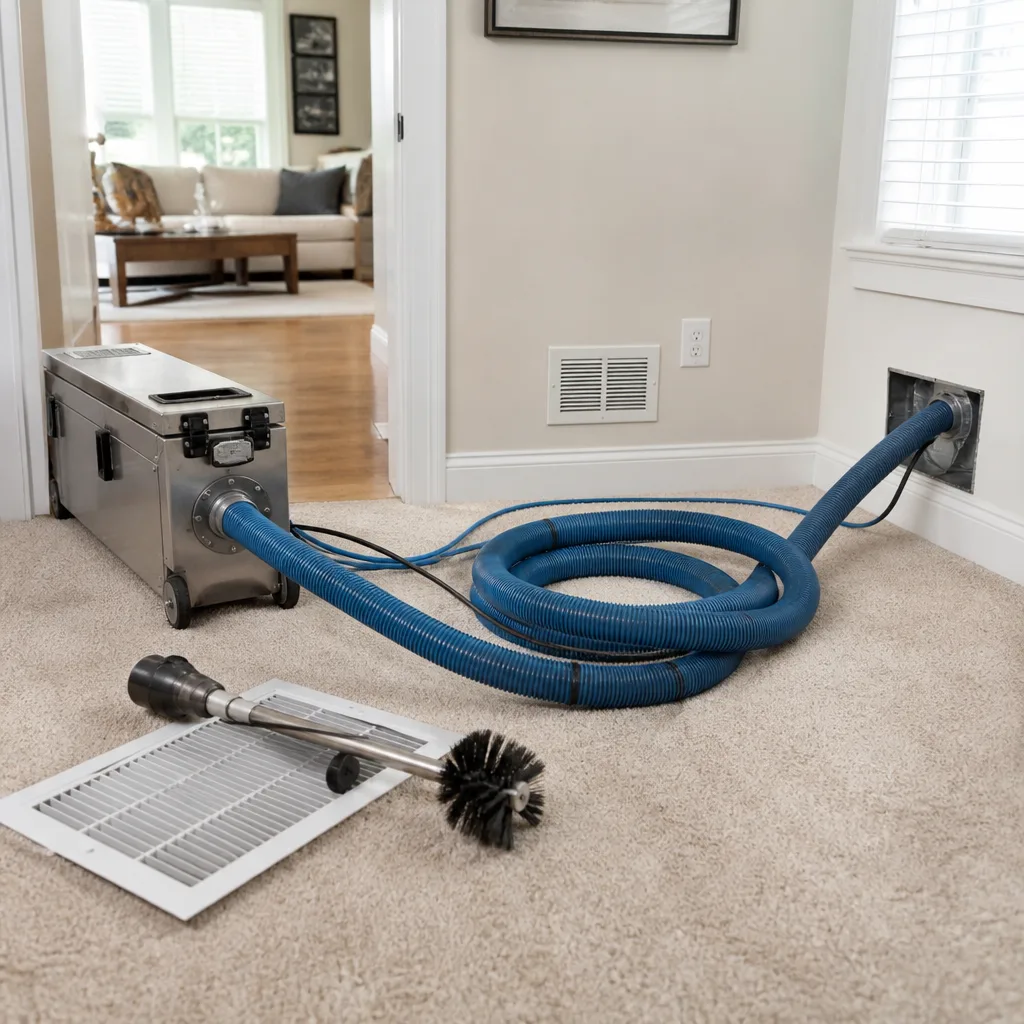 Whole-home duct cleaning
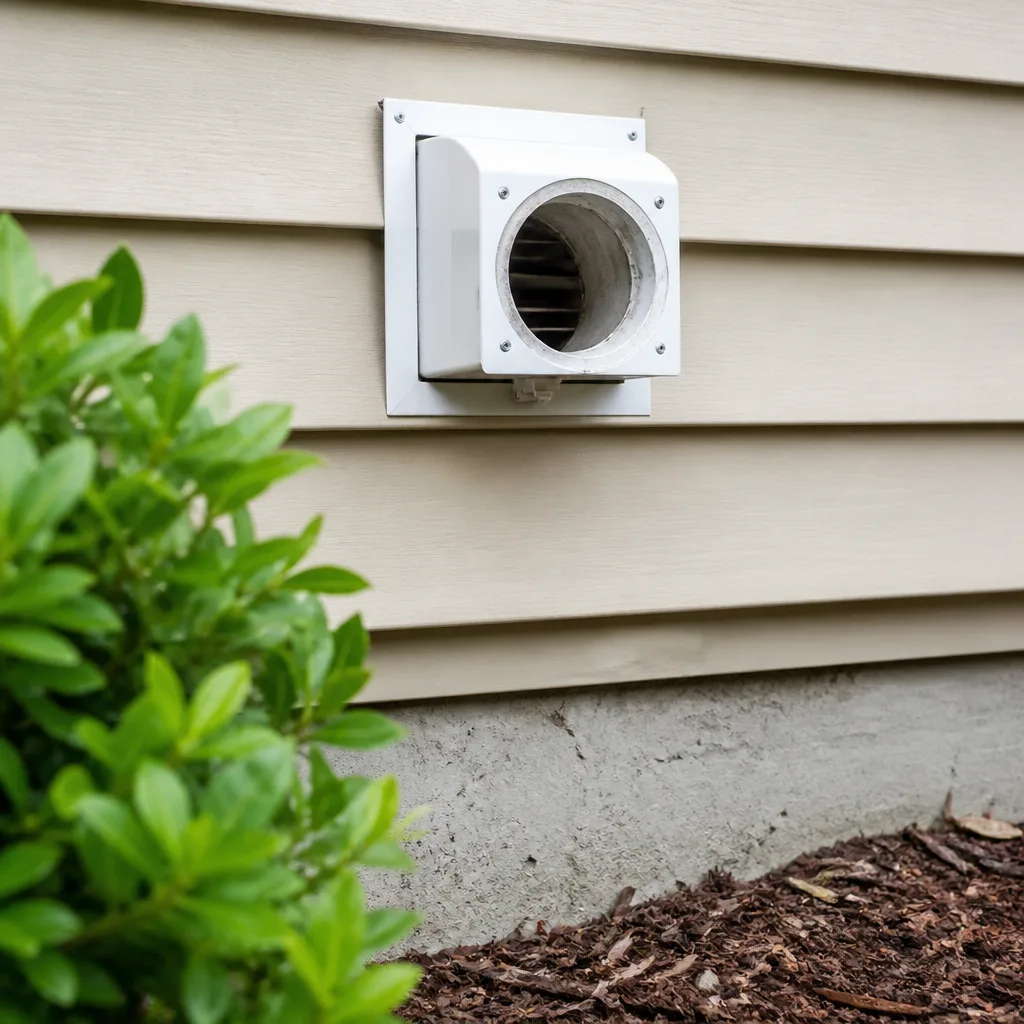 Dryer vent cleaning
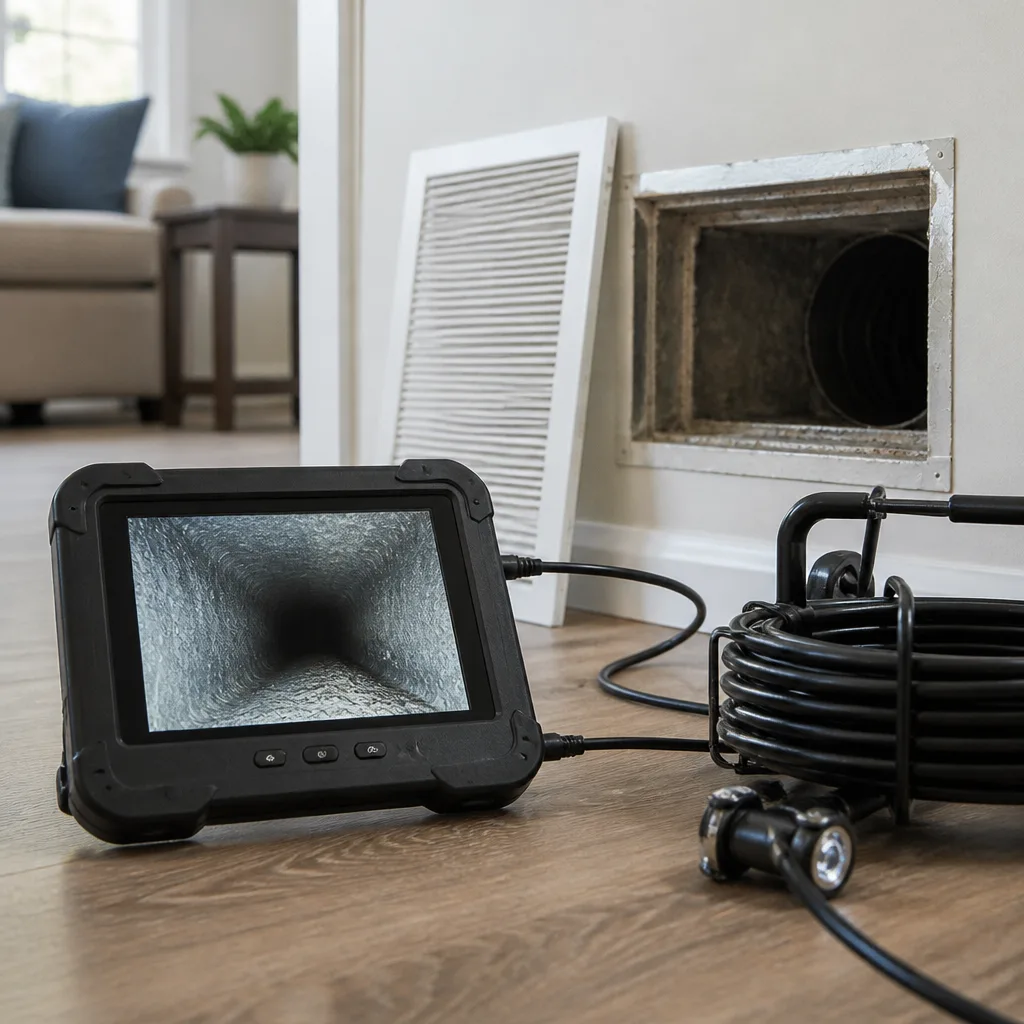 Camera inspection
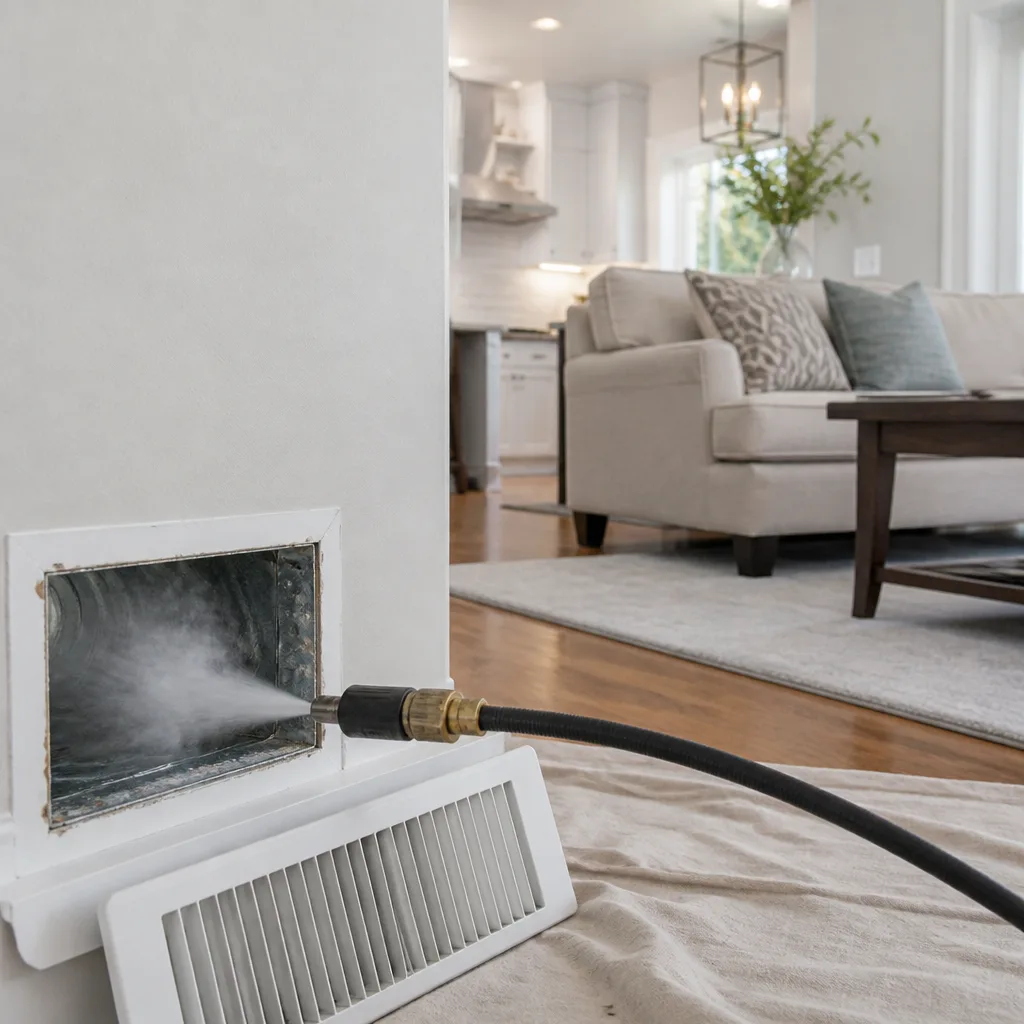 Sanitizing & deodorizing
Whole-system duct and dryer vent check with before-and-after photos - you see exactly what came out of your vents
That "$99 whole-house special" is a bait ad - the real number appears once they are in your hallway, or the "clean" is a shop-vac at the register. We photograph the inside of your ducts before and after instead.
Air Duct Cleaning Emergency Preparedness Guide for Parkside Homes
After a basement flood, most homeowners fix the visible water damage and forget the return air system sitting just inches above the flood line. That system has been pulling humid, contaminated air through every room in the house for days. By the time the drywall is repaired, the ducts have already circulated whatever was in the water through the living space. The same pattern plays out with smoke events, winter HVAC failures, and renovation dust: people handle what they can see and miss what their air handler keeps moving. This guide covers the emergencies Parkside homeowners rarely plan for, how each one affects duct interiors, and the response sequence that protects both the home and the insurance claim.
Quick Answer
In an air duct emergency, the correct sequence is: stop the air handler, document the damage with photos and notes, call your insurer, then have a professional assess the ducts before restarting the system. Post-flood and post-fire duct contamination needs restoration-grade cleaning with containment equipment, not a shop vac or a standard clean. Air Duct Cleaning Parkside handles that assessment and cleaning for Parkside properties with Rotobrush, Nikro, and Abatement Technologies equipment.
Styles & brands we work with
- Whole-home duct cleaning
- Dryer vent cleaning
- Camera inspection
- Sanitizing & deodorizing
Table of Contents
- Post-Flood Duct Contamination in Parkside Homes
- Smoke and Fire Infiltration: Why Standard Cleaning Falls Short
- HVAC Failure During a Parkside Winter
- Post-Renovation Duct Contamination
- What to Document Before Any Cleaning Begins
- The Emergency Response Sequence, Step by Step
- Preparing Your Duct System Before the Next Event
Post-Flood Duct Contamination in Parkside Homes
Water that reaches the return plenum or any low-lying duct run creates a contamination problem that gets worse the longer it sits. In a typical Parkside basement flood, the return trunk sits low enough that rising water can enter it within the first few inches of accumulation. Once water is inside the duct, the moving air carries moisture and whatever else was in the water through the entire system.
Duct contamination becomes a health risk when three conditions line up: standing or absorbed moisture persists in the duct interior, organic material (dust, debris, insulation fibers) is present to support microbial growth, and the system keeps running. In our experience, the second condition is almost always met because return ducts are the dustiest part of any home air system. The third condition is entirely the homeowner’s decision, and it’s the one that matters most.
Timing cleaning against structural drying matters because ducts hold moisture differently than building materials do. Drywall and framing dry from the surface inward. Duct interiors are enclosed and often insulated, which means the interior stays wet even after the surrounding walls read dry on a moisture meter. Cleaning too early, before the structure stabilizes, reintroduces moisture. Cleaning too late allows growth to establish. The workable window is after the flood water is removed and the structural drying has begun, but before the air handler is put back into regular service.
- Stop running the air handler as soon as water is discovered near any duct run
- Photograph the water line inside the duct opening before any cleanup
- Wait for structural drying to progress, then have the duct interior assessed directly
- Complete cleaning and sanitizing before turning the system back on for normal use
For Parkside homes with finished basements, this process usually means moving furniture and carpet before duct work begins. We schedule air duct cleaning around the drying contractor’s timeline so neither trade undoes the other’s work.
Smoke and Fire Infiltration: Why Standard Cleaning Falls Short
Combustion byproducts do not behave like dust. They coat duct interiors as a fine, adhesive film that bonds to galvanized metal and flexible duct lining, and that film holds odor compounds that standard cleaning leaves behind. This is why a house that has had a fire often smells smoky for months even after a “duct cleaning” was performed. The cleaning removed the visible soot, but the residue that produces the smell stayed bonded to the duct surface.
Restoration-grade cleaning for smoke events differs from routine cleaning in three ways:
- Containment. Negative-pressure containment keeps soot particles and cleaning debris from migrating into clean areas of the home. Abatement Technologies air filtration equipment is built for this protocol, and it’s the standard we work to in Parkside.
- Mechanical agitation plus chemical treatment. Soot that has bonded requires rotary brush agitation (Rotobrush and Nikro systems provide this) followed by a chemical agent matched to the residue type.
- Sanitizing. After soot removal, Guardsman-brand sanitizing treatments address remaining odor compounds and microbial concerns in the duct interior.
The critical point most homeowners miss is that reopening a fire-damaged home and running the HVAC before restoration-grade cleaning spreads the contamination through spaces that weren’t affected by the fire itself. Kitchen fires, chimney issues, and electrical fires all produce enough residue to require this level of response if the HVAC system was running during or after the event. In Parkside, where older housing stock often means original duct runs with more surface area for residue to collect, that spread pattern is more pronounced.
HVAC Failure During a Parkside Winter
An extended no-heat period creates a duct problem even without any water or smoke. Heat loss through uninsulated runs in unconditioned attics and crawl spaces causes condensation on duct interiors, and when the system comes back online, that moisture goes straight into the living space. The bigger concern is what happens when the heat comes back on while the ducts contain settled dust, insulation fragments, or rodent debris from the cold period.
Before restarting a system that has been off for an extended cold stretch, three inspections matter:
- Check the filter and filter housing. Cold-period settling often collects debris on the return-side filter that wasn’t there when the system shut off.
- Inspect accessible duct joints for separation. Temperature cycling shrinks and expands duct seams, and a separated joint pulls attic or crawl space air into the supply stream.
- Look for condensation or moisture staining inside the return plenum. A small amount of condensation is normal; standing water or staining means the duct needs assessment before the system runs on a regular cycle.
In Parkside, heating emergencies tend to spike when a cold snap follows a mild period, because systems that haven’t run hard in weeks get pushed to their limit. We’ve seen more duct separation issues from that pattern than from any single failure. Duct Repair & Sealing is the fix when joints have opened up, and it’s one of the five core services we offer Parkwide, along with HVAC cleaning for the equipment side of the same problem.
Post-Renovation Duct Contamination
Drywall dust is the most common contaminant we find in Parkside ducts after a renovation, and it’s the one homeowners most often underestimate. Construction dust from cutting, sanding, and demolition infiltrates the return system within hours, and once it’s coated the duct interior it stays there for years. The particles are fine enough to circulate past standard air filters, which is why HVAC filters get replaced frequently during renovation and still don’t stop the contamination.
The correct level of post-renovation cleaning depends on what the renovation involved:
- Surface-level renovation (paint, trim, flooring): standard duct cleaning is usually sufficient, plus a filter change.
- Moderate renovation (kitchen or bath remodel, cabinet replacement): full-system cleaning is warranted, including the air handler and return plenum.
- Heavy renovation (drywall demolition, structural work, significant dust generation): cleaning plus duct integrity inspection, because dust infiltration often reveals or worsens duct seams.
One detail worth knowing: construction dust is abrasive. When it coats supply trunk lines, it wears on flexible duct lining over repeated heating and cooling cycles, which is why we recommend inspecting duct condition alongside cleaning after heavy renovation. The two problems tend to appear together. dryer vent cleaning is also worth scheduling after a renovation if the laundry area saw work, since lint migrates the same way dust does.
What to Document Before Any Cleaning Begins
Pre-cleaning documentation protects the homeowner’s insurance claim and their ability to prove the scope of contamination if the claim is questioned later. Once the duct is cleaned, the evidence of what was in it is gone. This is the single most overlooked step in post-emergency duct work, and it’s the one we insist on before we start for any Parkside client dealing with an insurance matter.
Photograph and record the following before cleaning:
- The water line or soot line inside each accessible duct opening, with a tape measure for scale
- Close-ups of any visible mold, soot, or debris at the register and return grille
- The filter as it was found, before replacement
- Any duct joint damage, separated seams, or disconnected runs
- A written log of when the event occurred and when the system was last running
Give the documentation to your insurer before cleaning, not after. Some policies require pre-cleaning documentation for duct and HVAC claims, and providing it upfront avoids disputes. We work with your insurer’s documentation requirements on Parkside jobs and provide the before-and-after records that most adjusters want to see.
The Emergency Response Sequence, Step by Step
The sequence matters more than the individual steps. Here’s how an emergency should unfold on a Parkside property:
- Stop the air handler. Turn it off at the thermostat or breaker. Every hour the system runs after a flood, fire, or major dust event spreads the contamination further.
- Photograph everything. Duct openings, water lines, soot lines, and filter condition. Do this before any cleanup begins.
- Call your insurer. File the claim and ask about their documentation requirements for the HVAC system.
- Arrange assessment. A professional assessment confirms whether the ducts need restoration-grade cleaning or whether standard cleaning will address the contamination.
- Coordinate with the structural contractor. Duct cleaning needs to happen after structural drying and before the air handler goes back to normal use, so the timing has to be worked into the overall restoration schedule.
- Complete cleaning, sanitizing, and any repair. Duct Repair & Sealing belongs in this step if the event revealed damaged seams.
- Restart the system and verify. After cleaning, run the system and check airflow at each register. Reduced airflow usually means debris remains somewhere in the system.
In our experience, step five is where the process most often breaks down because the drying contractor and duct professional aren’t coordinating. On Parkside projects we schedule around the drying timeline specifically. If you’re managing multiple trades, tell each one what the others are doing.
Preparing Your Duct System Before the Next Event
Every emergency is easier when the ducts are already clean, sealed, and documented. A few preparation steps go a long way:
- Have an Air Duct Cleaning Parkside assessment done now, before an emergency, so you know the current condition of the system and any weak points
- Ask about duct sealing for any joints that show separation, because a sealed system limits how much contamination can enter during the next event
- Keep a photo log of your duct system in a safe place, so you have a baseline if a claim is ever needed
- Replace the filter on schedule and note the dates, which helps document filter condition during a claim
- Know the return plenum’s location and how water would reach it, so you can check it quickly after a flood
For homeowners already dealing with chronic air quality concerns, a periodic Air Quality & Sanitizing treatment after routine cleaning keeps the system’s interior cleaner between events. Honeywell and Aprilaire air quality systems pair well with this, and those are brands we work with regularly. Preparation is cheaper than emergency response, every time.
Common Mistakes to Avoid
- Restarting the HVAC before the ducts are assessed. Every hour of runtime after a contamination event spreads the problem further into the system. Keep the air handler off until it’s been taken a look at.
- Relying on a shop vac or a “quick clean” for flood or fire contamination. Restoration-grade events need restoration-grade equipment and containment. Consumer-grade vacuums recirculate more than they capture.
- Cleaning ducts before structural drying is complete. Moisture comes back into the duct from the surrounding structure. Coordinate timing, don’t clean first and dry later.
- Skipping pre-cleaning documentation. Once the ducts are cleaned, the evidence is gone. Photograph and record before any work begins, especially for a claim.
- Ignoring duct joint damage revealed by the event. Floods and extreme cold cycling both separate seams. Cleaning a duct that still leaks attic air means recontamination within months.
- Treating smoke smell with air freshener or an ozone device instead of addressing the duct interior. The residue that produces the odor is bonded to the duct surface, and it stays there until the surface is cleaned.
- Assuming a new filter was enough after renovation. A filter catches what passes through it. Duct interior surfaces that already collected construction dust keep releasing it back into the air stream.
See the difference
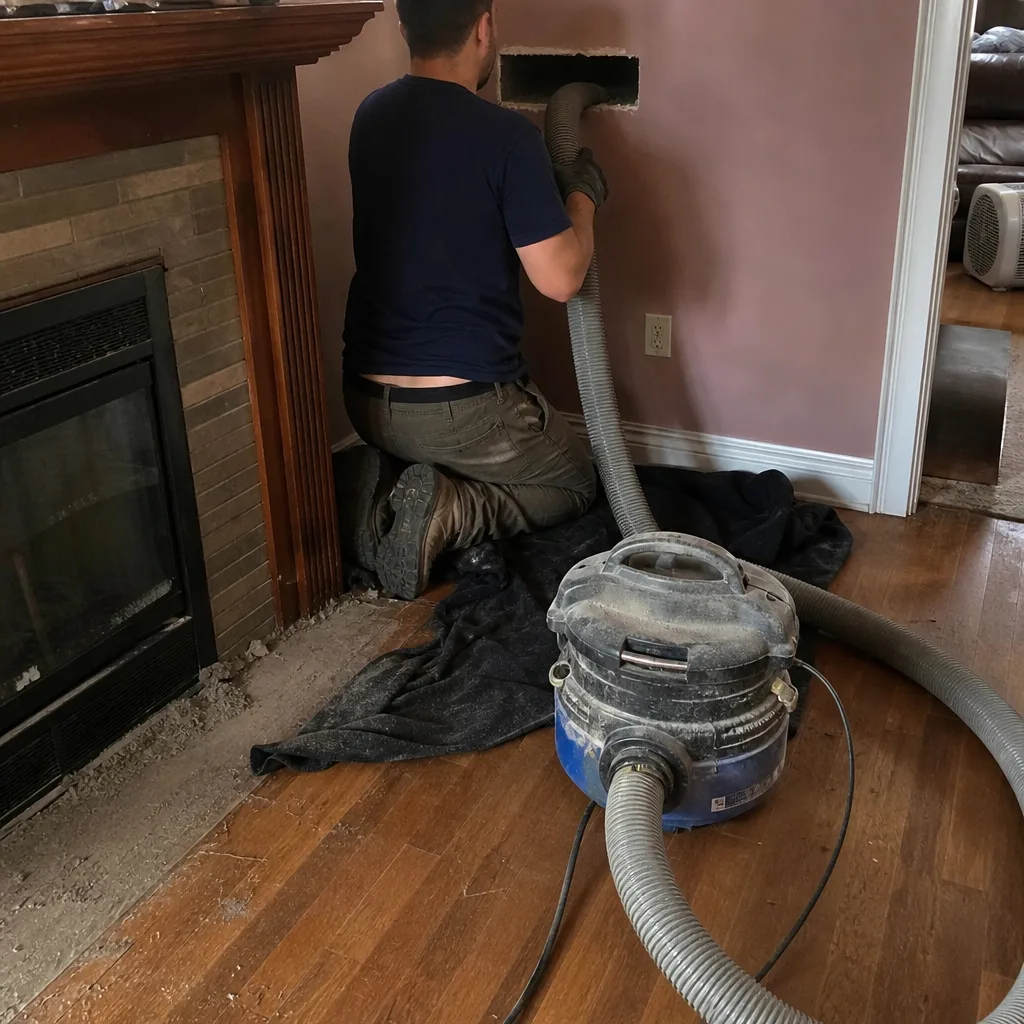 Before
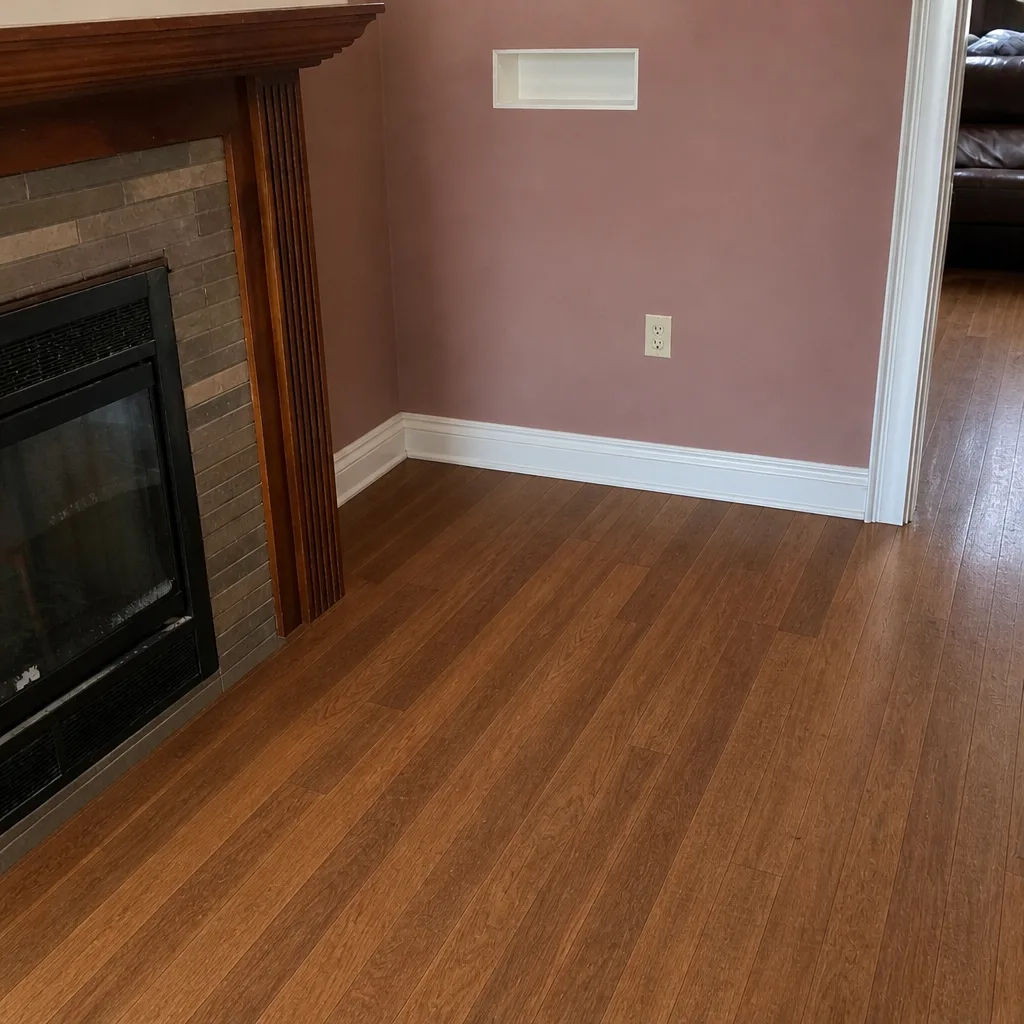 After
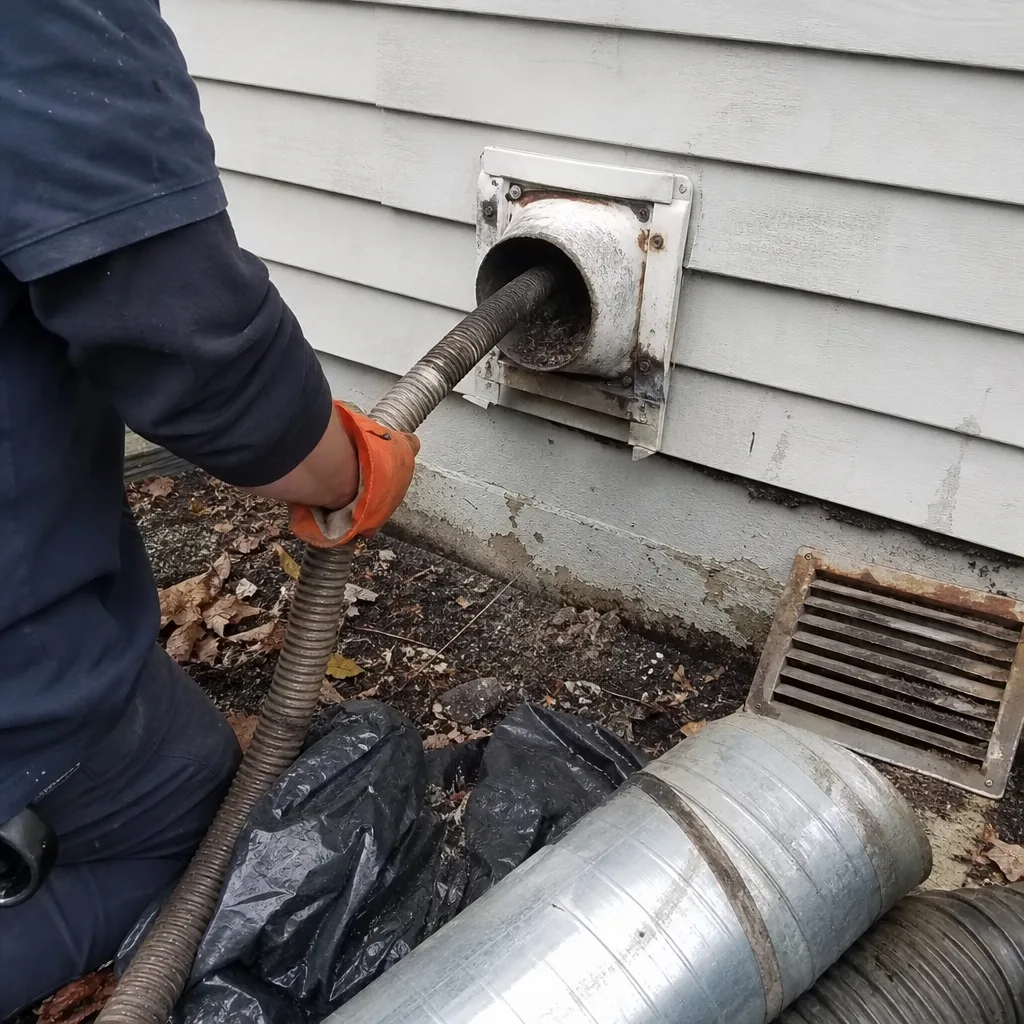 Before
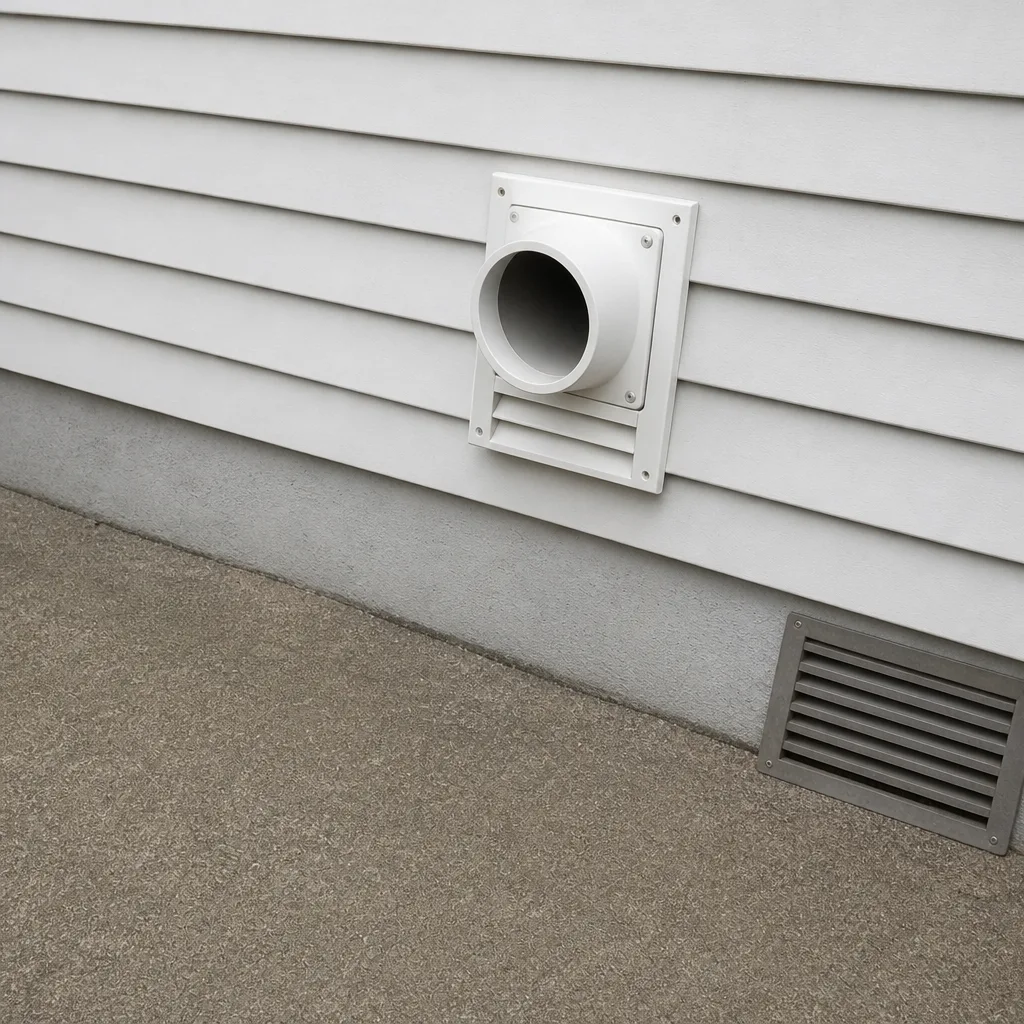 After
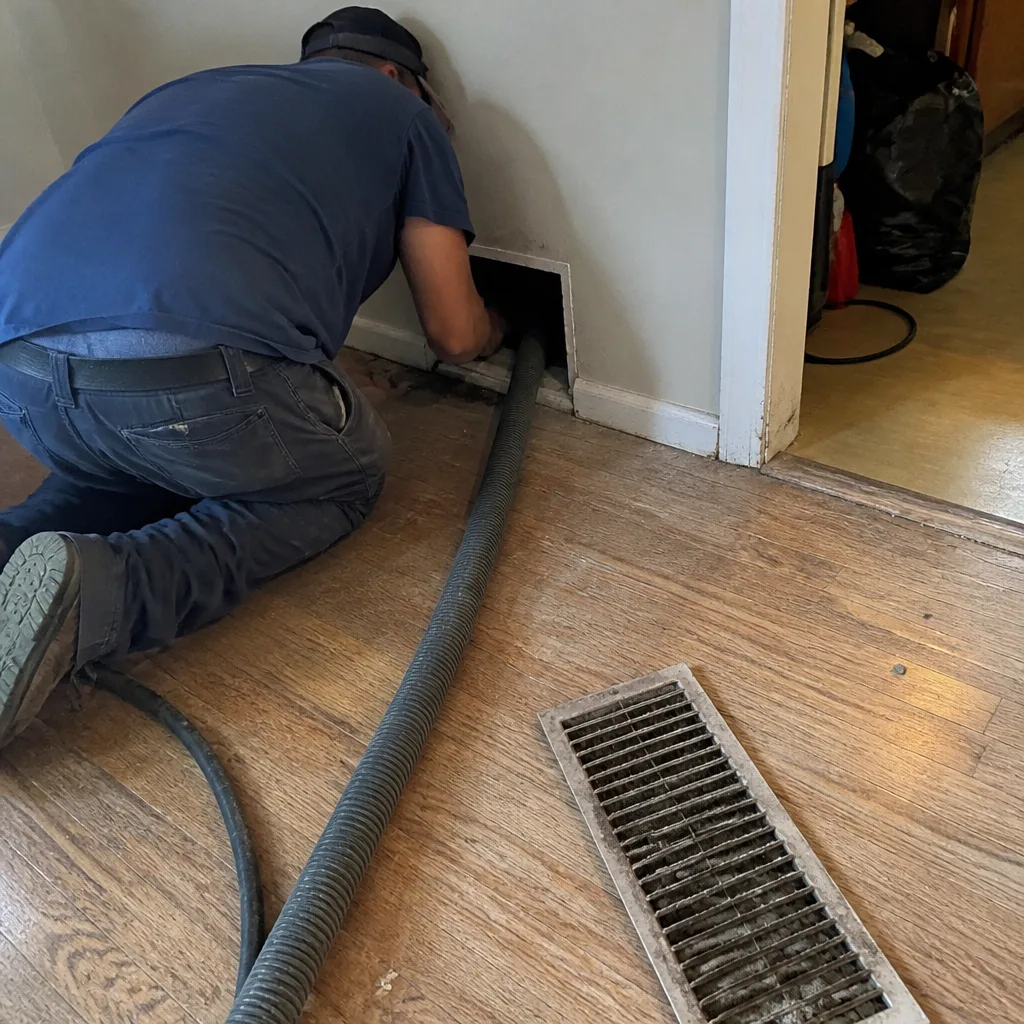 Before
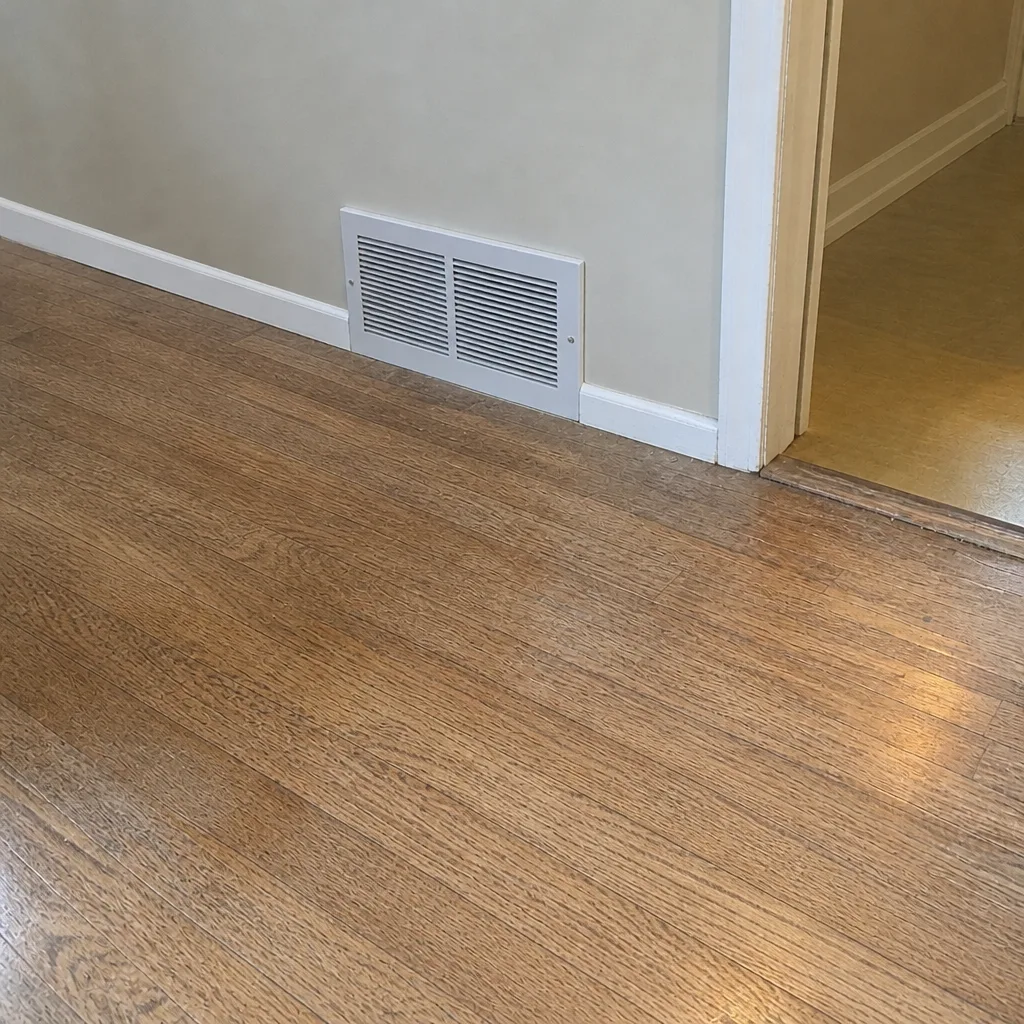 After
When to Call a Professional
Call a professional as soon as any of the following is true: water has reached a return duct or the air handler, the home has had a fire or significant smoke event while the HVAC was running, the system has been off through an extended cold period and you smell mustiness at the registers, or a major renovation has just finished. These aren’t situations a visual check resolves. Air Duct Cleaning Parkside offers free estimates in Parkside, and we’ll tell you honestly whether the situation needs restoration-grade cleaning or routine cleaning. Call (833) 482-5968. We answer 24/7. Fast dispatch from 7am to 7pm, Sunday through Friday. Our technicians have up to 13 years of experience with post-emergency duct work, and we use Rotobrush, Nikro, and Abatement Technologies equipment on every job because the equipment makes the difference on this kind of contamination.
Frequently Asked Questions
Turn off the air handler immediately, at the thermostat or the breaker. The system pulls humid, contaminated air from the flooded area into every room in the house with every cycle, so stopping it is the single highest-impact step. Then photograph the water line inside the duct before any cleanup and call your insurer.
No. Combustion byproducts bond to duct interiors in ways that standard cleaning doesn’t fully address, and the residue that produces smoke odor stays behind on the duct surface. Restoration-grade cleaning with containment equipment and sanitizing treatment is the correct response for any fire that involved the HVAC system.
It depends on the scope. Paint and flooring work usually only needs routine cleaning and a filter change. Drywall demolition or structural work calls for full-system cleaning plus a duct integrity check, because heavy dust generation often reveals or worsens duct seams. If you’re unsure, an assessment settles it.
Because once the ducts are cleaned, the physical evidence of contamination is gone. Pre-cleaning photos, a written log, and a filter photo give your insurer what they need to validate the claim. Providing that documentation before work begins avoids disputes and speeds the process.
Routine cleaning every few years is reasonable for most homes, but emergencies override any schedule. Floods, fires, extended cold period HVAC failures, and major renovations all mean a cleaning should happen sooner than the routine interval. Chronic allergy or dust concerns can also justify more frequent cleaning.
Returning smoke odor usually means residue remained bonded to the duct interior after the first cleaning. A second, more thorough cleaning with mechanical agitation followed by sanitizing treatment is typically the fix. Call (833) 482-5968 for an assessment of what was missed.
The Bottom Line
Parkside duct emergencies come down to a handful of decisions: stop the air when something has happened, document before you clean, coordinate timing with structural work, and use equipment that fits the scope of the contamination. Floods, fires, winter HVAC failures, and major renovations each leave a different signature in the ducts, and each demands a different response. Standard cleaning handles routine dust. Restoration-grade cleaning with containment, agitation, and sanitizing handles emergencies. Get the assessment right before you spend a dollar on cleaning, because the sequence is what protects both the air in your home and the claim you’re filing. Air Duct Cleaning Parkside provides that assessment for Parkside homes with free estimates.
Written by the team at Air Duct Cleaning Parkside.